Luxury hospitality demands more than standard furniture solutions. High-end properties require a bespoke FF&E supplier who understands that every detail contributes to the guest experience, brand differentiation, and investment returns.
Selecting the right partner for custom hotel FF&E procurement determines whether your property achieves distinctive excellence or settles for ordinary. This guide examines key criteria for evaluating bespoke FF&E suppliers capable of delivering truly exceptional results.
Bespoke hospitality furniture represents the pinnacle of customization, where every element is engineered to reflect your property’s unique vision. Unlike standard production, bespoke hotel furniture begins with your specific requirements and ends with pieces that are entirely yours.
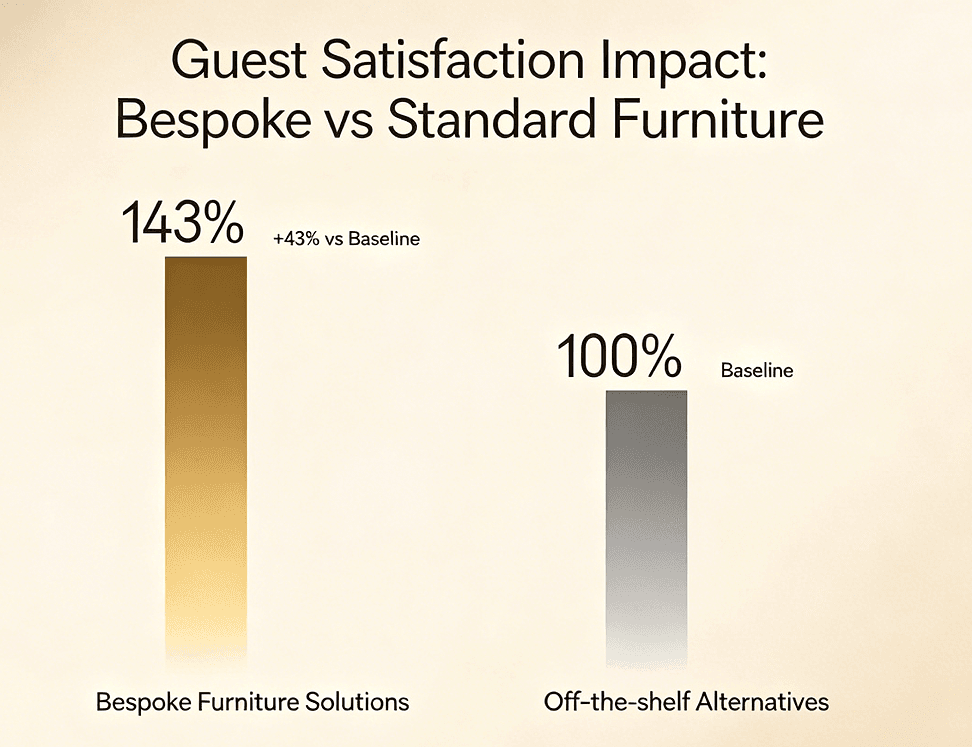
The distinction matters profoundly. Properties that invested in bespoke solutions report 43% higher guest satisfaction scores compared to those using off-the-shelf alternatives, with notable improvements in perceived value, exclusivity, and guest willingness to return.
Evaluating a bespoke FF&E supplier requires attention to four critical dimensions:
1. Design Excellence and Creative Vision
Exceptional bespoke hospitality furniture starts with world-class design. Evaluate the supplier’s portfolio for evidence of artistic direction, innovation, and aesthetic sophistication.
Have they designed for comparable luxury properties? Can they articulate a clear design philosophy? The best bespoke FF&E suppliers employ master designers with international reputations and deep understanding of luxury hospitality aesthetics. They should inspire confidence through their vision, not merely execute your specifications.
2. Artisanal Craftsmanship and Manufacturing Excellence
Bespoke quality demands superior craftsmanship at every production stage. Inquire about materials sourcing, fabrication techniques, and quality control processes. Does the supplier employ master craftspeople? What manufacturing methods distinguish their work?
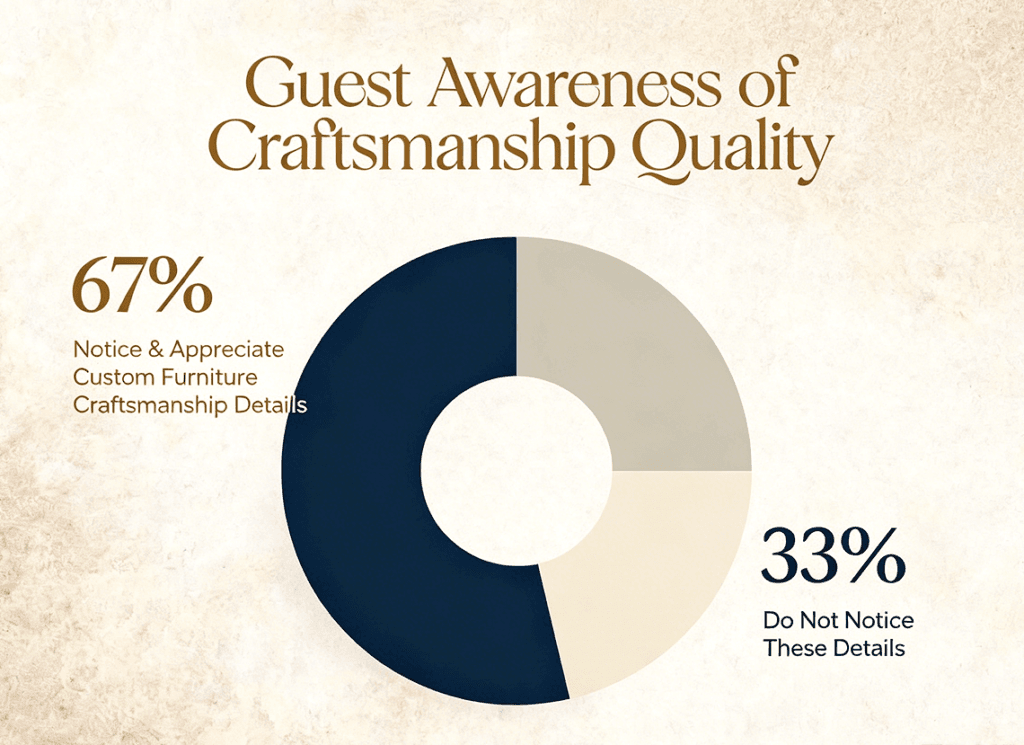
Luxury properties expect hand-finished details, premium material selections, and precision engineering invisible to guests but essential to durability. Industry data indicates that 67% of luxury hotel guests notice and appreciate fine craftsmanship details, particularly in custom hotel furniture procurement that reflects their own quality expectations.
3. Customization Depth and Technical Flexibility
True bespoke requires profound customization capacity beyond surface modifications. Can the supplier accommodate unusual dimensions, integrate advanced technology, incorporate specialized materials, or engineer innovative functional solutions?
The ability to tackle complex technical challenges separates genuine bespoke suppliers from those offering limited customization. Your supplier should welcome challenging specifications and demonstrate technical expertise across materials, engineering, and innovative solutions.
4. Exclusive Partnership and Dedicated Support
Bespoke projects demand more than vendor relationships—they require dedicated partnership. Does the supplier assign a dedicated project manager? Will they provide personal attention throughout design, production, and installation?
Premium properties expect regular communication, rapid responsiveness, and unwavering commitment to excellence. A bespoke hospitality furniture supplier should view your project as an opportunity to demonstrate their capabilities, not merely another transaction.
Beyond these core dimensions, evaluate the supplier’s track record with timelines, budget management, and problem-solving. Bespoke projects are inherently complex, involving unknowns and challenges. The right supplier demonstrates calm, creative problem-solving when obstacles arise. Request detailed project examples documenting timelines, budget management, and issue resolution.
Additionally, consider the supplier’s understanding of custom hotel FF&E procurement economics. While bespoke solutions cost more upfront, sophisticated buyers understand total cost of ownership. Bespoke furniture typically lasts significantly longer, requires less replacement, commands premium guest perception, and supports higher room rates.
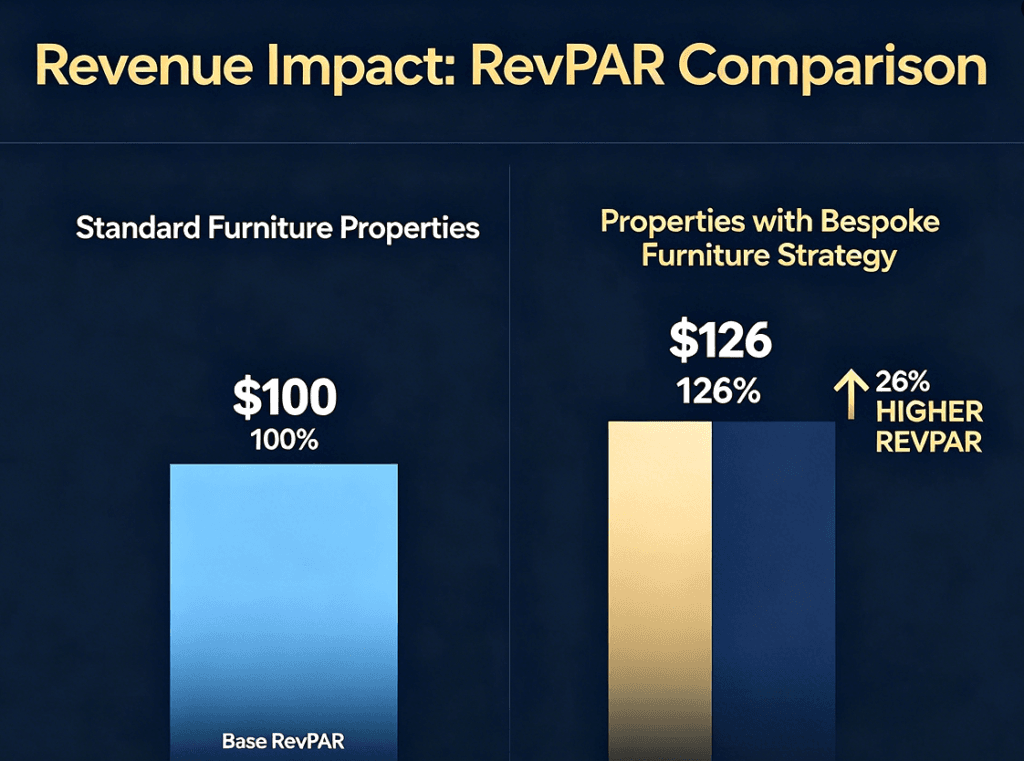
Properties investing in bespoke hospitality furniture achieve superior returns despite higher initial investment. Data shows that luxury properties with comprehensive bespoke furniture strategies enjoy 26% higher RevPAR compared to comparable properties using standard solutions.
Why PMOU
PMOU is a professional one-stop hotel FF&E manufacturer in China. It helps clients import hotel furniture from China with direct factory control and has assisted global clients in controlling FF&E costs through tariff cycles since 2018. It provides procurement solutions, not just furniture.
Our commitment to superior service quality and rapid response ensures your project stays on track while exceeding expectations. Whether you’re planning a full property renovation or updating specific areas, PMOU provides the expertise, reliability, and responsiveness to bring your vision to life. Visit Onestophotelffe.com to explore how we can support your next hotel furniture project.
FAQs: Bespoke Hotel Furniture & FF&E Procurement
1. What is the difference between bespoke and standard furniture?
Bespoke furniture is custom-designed exclusively for your property. Standard furniture is mass-produced. Bespoke delivers 43% higher guest satisfaction and creates a distinctive brand experience.
2. How much more expensive is bespoke FF&E?
Bespoke typically costs 20-40% more upfront. However, it lasts longer, requires less replacement, and supports higher room rates. Properties enjoy 26% higher RevPAR, recovering the premium within 3-5 years.
3. How long does bespoke furniture take?
Typical timeline: 4-8 weeks design, 2-4 weeks sampling, 8-12 weeks production, 2-4 weeks delivery/installation. Total: 16-28 weeks from concept to installation.
4. What should I look for in a bespoke supplier?
Evaluate design excellence (portfolio quality), manufacturing expertise (craftspeople credentials), customization capability (complex solutions), and partnership approach (dedicated support).
5. Can suppliers help control renovation costs?
Yes. They optimize FF&E allocation through smart material selection, design efficiency, phased deployment, and value engineering—typically achieving 20-25% savings versus multiple vendors.
6. What’s the difference between OEM and ODM?
OEM: You provide designs, they manufacture. ODM: They provide both design and manufacturing. Choose OEM if you have clear vision; choose ODM to leverage supplier expertise.
7. How do I maintain consistency across multiple properties?
Use standardized design systems, maintain a digital asset library, work with one supplier for consistency, and deploy designs sequentially. Consolidated procurement delivers 15-20% cost savings.
8. What warranty and support should I expect?
Standard: 2-5 year manufacturing warranty, 7-10 years spare parts availability, onsite installation support, 48-72 hour response times, and maintenance guidance. Quality partnerships reduce post-delivery issues by 38%.