The global hospitality industry is entering a new phase of transformation. As guest expectations continue to evolve, hotels, restaurants, and commercial spaces must adapt not only in service but also in design. In 2026, hotel furniture trends are no longer just about aesthetics — they are about creating meaningful experiences, improving operational efficiency, and ensuring long-term durability.
For developers, procurement managers, and designers, selecting the right furniture is a strategic decision. It directly impacts brand positioning, guest satisfaction, and maintenance costs. Choosing a reliable hotel furniture supplier is equally critical, as execution quality determines whether a design vision can be successfully realized.
In this article, we explore the key hotel furniture trends for 2026 and explain how PMOU supports global projects with stable quality, efficient production, and consistent delivery.
1. Warm & Comfortable Color Palettes
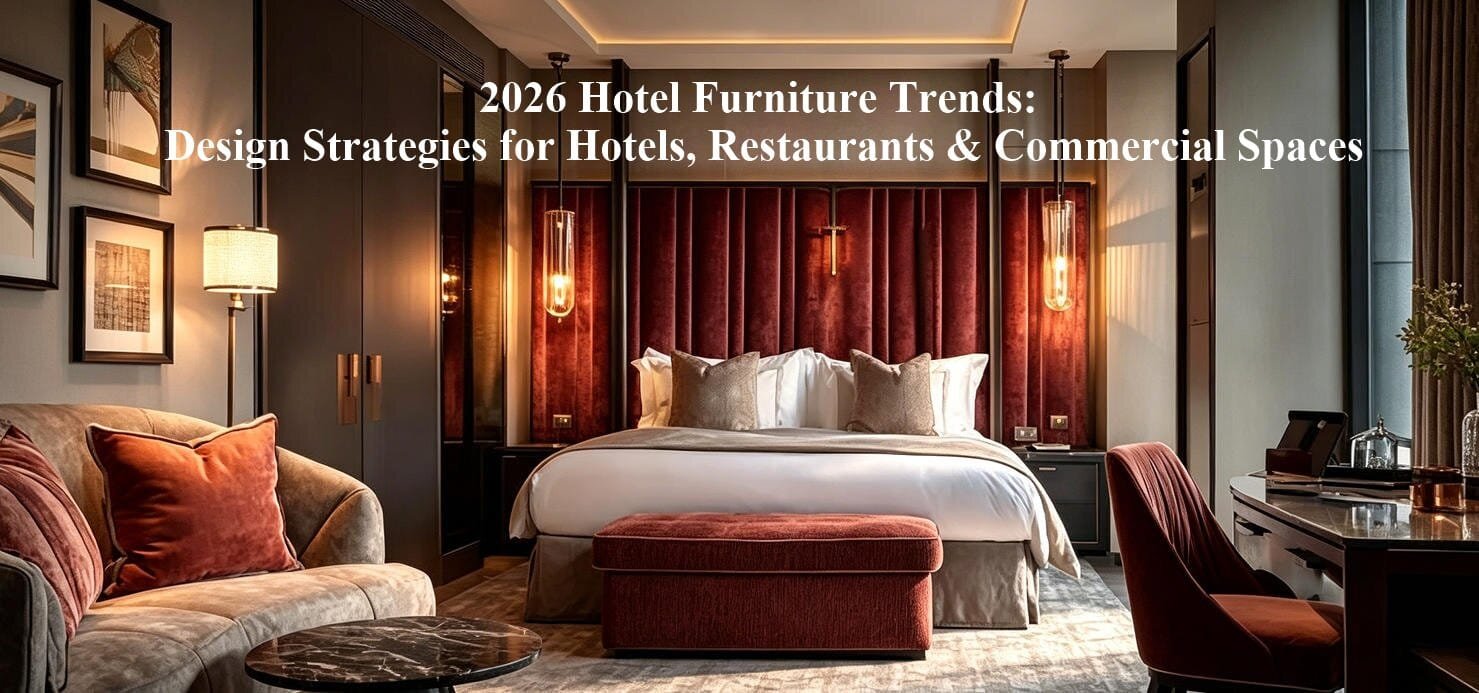
One of the most noticeable hotel interior design trends in 2026 is the shift toward warm and inviting color palettes. Neutral tones such as beige, cream, taupe, and natural wood finishes are replacing colder minimalist styles. These colors create a sense of comfort and familiarity, helping guests feel relaxed from the moment they enter the space.
In addition, layered textures — such as fabric upholstery, wood grains, and soft lighting — are being used to enhance depth and visual warmth. This approach is particularly effective in hotel rooms, lounges, and dining areas, where atmosphere plays a crucial role in the overall guest experience.
For large-scale hotel projects, warm color palettes also offer a practical advantage: they are easier to standardize across multiple rooms while maintaining a premium look.

2. Sustainable & Eco-Friendly Materials
Sustainability has become a core requirement in modern hospitality design. In 2026, more hotel projects are prioritizing eco-friendly materials, including FSC-certified wood, low-emission coatings, and recyclable components.
This shift is driven not only by environmental regulations but also by guest expectations. Travelers are increasingly aware of sustainability issues and prefer brands that demonstrate responsibility.
From a procurement perspective, choosing durable materials is equally important. High-quality furniture reduces replacement frequency, lowers long-term costs, and improves operational efficiency.
Reliable contract furniture manufacturers play a key role in this process by ensuring material consistency, quality control, and compliance with international standards.
3. Multifunctional & Space-Saving Furniture
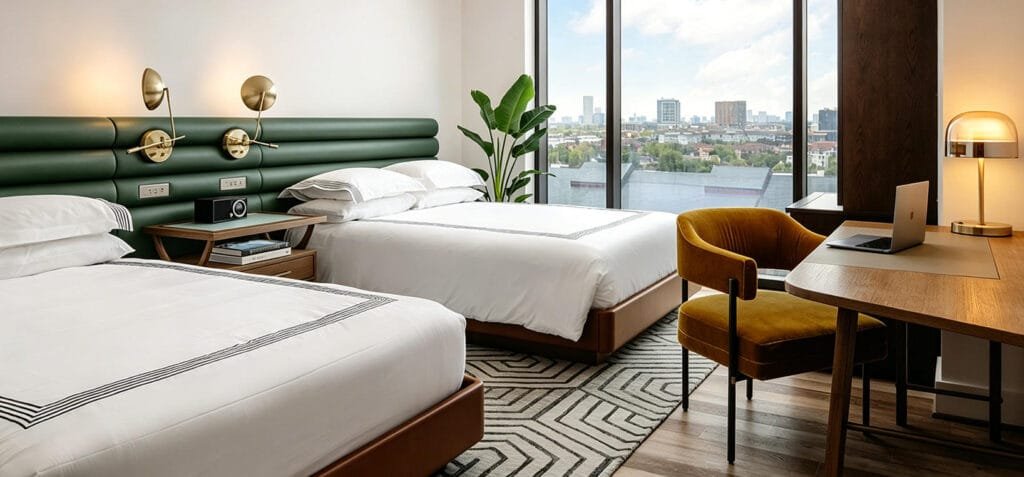
As hotel spaces become more compact and diversified, multifunctional furniture is gaining increasing importance. In 2026, flexibility is a key design principle, especially in urban hotels and mixed-use developments.
Furniture is no longer limited to a single function. For example, TV cabinets can include storage and cable management systems, while desks may integrate charging stations and workspace solutions. Modular furniture systems also allow hotels to adapt layouts based on different needs.
This approach helps maximize space efficiency and improves the return on investment for each room.
4. Health-Centered Design
Health and wellness are becoming central themes in hospitality design. Guests are paying more attention to comfort, ergonomics, and material safety.
In response, hotels are adopting furniture that supports better posture, uses non-toxic finishes, and enhances indoor air quality. Soft edges, ergonomic seating, and breathable materials are all part of this trend.
This shift reflects a broader movement toward human-centered design, where furniture contributes directly to physical and psychological well-being.
5. Execution & Reliability
While design trends are important, execution ultimately determines project success. Many hotel projects face challenges such as inconsistent quality, production delays, and communication issues.
This is why choosing the right hotel furniture supplier is critical. A reliable partner ensures that design concepts are translated into high-quality products and delivered on time.
PMOU supports global clients with in-house manufacturing, strict quality control, and efficient production systems. From sample development to bulk production, consistency is maintained at every stage.
6. Conclusion
The hotel furniture trends of 2026 highlight a clear direction: comfort, sustainability, flexibility, and reliability. However, trends alone are not enough. Successful projects require strong execution, consistent quality, and dependable partners. By combining design understanding with manufacturing expertise, PMOU helps clients transform ideas into real, scalable solutions for global hospitality projects.
CTA
Looking for a reliable hotel furniture supplier?
Visit: www.onestophotelffe.com
Frequently asked questions
What are the latest trends in hospitality furniture?
The key trends include sustainability, modular designs, technology integration, outdoor furniture adaptations, and the rise of vintage aesthetics.
How to choose sustainable hospitality furniture?
Opt for materials like FSC-certified wood, recycled plastics, and fabrics made from post-consumer waste. Sourcing from certified suppliers can also ensure adherence to sustainable practices.
Where to find custom hospitality furniture suppliers?
PMOU offers comprehensive solutions for customizable hospitality furniture, making it easy to meet specific design requirements through a single supplier.
What types of outdoor dining furniture are trending?
Key trends include durable aluminum and teak pieces, adaptable lounge sets, and weather-resistant tables and chairs designed for year-round outdoor use.
How to integrate technology in restaurant furniture?
Incorporate furniture with built-in charging stations, smart seating arrangements, and interactive dining tables that enhance the guest experience.
What are the benefits of modular furniture in hospitality?
Modular furniture maximizes space efficiency, allows for easy reconfiguration for events, and provides cost-effective solutions for changing requirements.
What qualifies as contract-grade furniture?
Contract-grade furniture is specifically designed for commercial use, constructed with durable materials that meet industry standards for comfort and longevity.