Explore materials for hotel furniture in Japan, plus their performance standards, comparisons, rules and real examples—to help you pick long-lasting, cheap hotel furniture solutions.
Introduction: Why are materials for hotel furniture so crucial in Japan?
Hotel owners, managers, and buyers need more than just attractive furniture. Japan’s humid summers, dry winters, long rains, and typhoons demand furniture that resists moisture, warping, mildew, and damage. Strict fire and eco rules also mean poor materials for hotel furniture raise costs and risk safety and brand image.
A Statista survey shows that in 2024, wood is the top furniture material in Japan, followed by metal. Wood remains the mainstream material, but additional features like moisture-proofing and fire-retardant treatments are becoming key features. This article compares materials for hotel furniture in Japan, with market and rule factors, to help you choose better.
Core Performance Criteria: Key Indicators for Judging Material Quality
When selecting materials for hotel furniture, the following performance criteria must be considered:
| Criterion | Why It Matters | Reference Standards or Data |
| Humidity Resistance / Dimensional Stability | Japan’s rainy season has high humidity and alternating wet/dry conditions. Materials prone to warping, cracking, or swelling can severely affect furniture longevity and appearance. | Engineered wood and solid wood need drying; metal parts need anti-rust coatings; size change in tests should be ≤2–3%. |
| Fire Resistance / Flame Retardancy | Japanese public buildings and commercial spaces have strict fire safety requirements. Authorities may prohibit non-compliant soft furniture, fabrics, or foam, or require extra changes. | Japan uses fire standards like JIS and fire ratings, and also refers to EN, BIFMA, and ASTM. |
| Environmental / Low VOC / Formaldehyde Emissions | Guests are increasingly sensitive, and regulations and market preferences favor green, eco-friendly materials. | Materials must comply with Japanese or international environmental certifications, such as F☆☆☆☆ (Japan’s low-formaldehyde certification). |
| Durability / Scratch Resistance / Lifespan | High usage leads to surface wear, scratches, and fading issues. | Finishes and laminates need strong wear resistance; fabrics need high Martindale values; structural parts must be durable. |
| Aesthetic / Cultural Integration | The Japanese market values wood texture, natural patterns, traditional elements (like washi paper, bamboo), or modern minimalist style. | Choose materials based on function, texture, color, feel, and how they fit the hotel’s style (Japanese, modern, or mixed). |
| Maintenance & Cost | Even the most beautiful materials for hotel furniture are not cost-effective if maintenance is complex or expensive. | Easy-to-clean surfaces, removable/replaceable parts, stain-resistant treatment, and clear after-sales service policies. |
Comparison of Common Material Categories: Pros, Cons, and Application Scenarios
Here are common materials for hotel furniture in Japanese, along with how well they meet hotel furniture standards.
1. Solid Wood/High-Gra de Hardwood
Pros:
- Natural texture and pleasant feel, giving guests a sense of quality and warmth.
- Maintenance: Sand and refinish damaged or worn surfaces.
- Japanese buyers favor wood for its traditional, natural, and premium look.
Cons:
- High costs, including the material itself, processing, and transportation.
- Inadequate drying or poor joining techniques can cause moisture-induced deformation or cracking.
- Heavy weight makes installation and handling difficult.
Application Scenarios:
In luxury hotels, solid wood with fine craftsmanship highlights headboards, furniture legs, counters, and décor.
Performance Evaluation as Materials for Hotel Furniture:
Properly treated solid wood is durable, eco-friendly, and highly attractive.
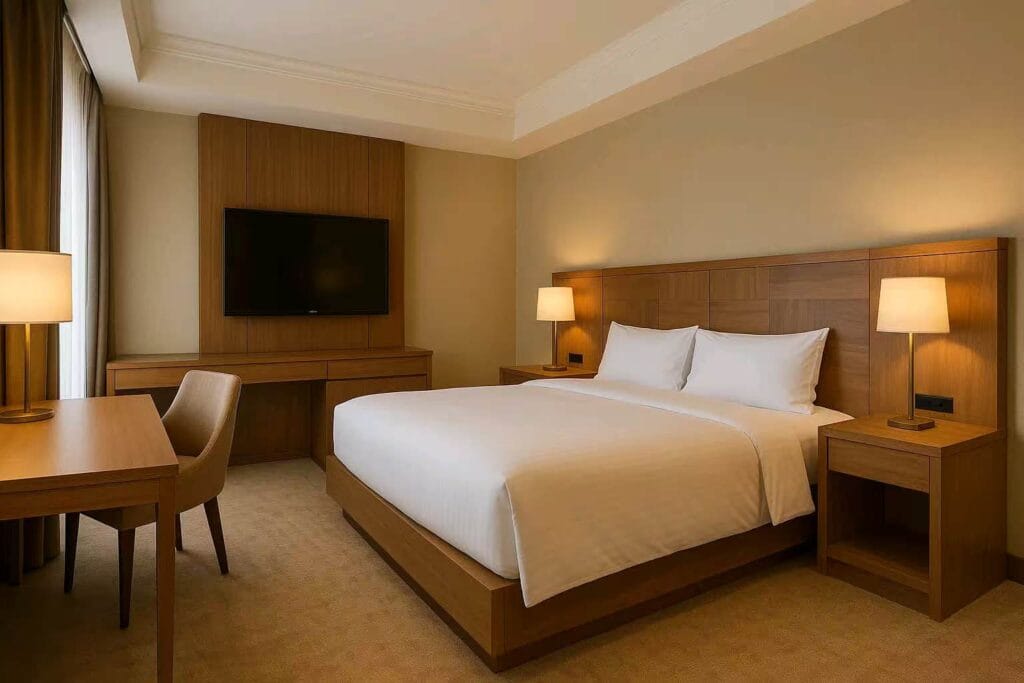
2. Engineered Wood / Plywood / Veneer / Composite Panels
Pros:
- Good stability, less sensitive to moisture than solid wood.
- Relatively low cost and mass production possible.
- You can apply it with various finishes and veneers to create diverse styles.
Cons:
- Low-quality veneer or glue can peel or warp easily in humid conditions or from water vapor.
- Damage to the surface is difficult to repair.
- The appearance may not be as natural as solid wood.
Suitable Applications:
Guest room furniture such as desks, TV cabinet backs, wardrobe interiors, headboards, etc. In public areas with tight budgets, high-quality engineered wood with a good laminate or veneer works well.
3. Metal / Aluminum / Stainless Steel Structures
Pros:
- High strength, good support, and resistance to deformation.
- For humid environments, suitable coatings can prevent rust and corrosion.
- Design it with thin legs or metal frames to create a strong modern look.
Cons:
- Metal can sometimes feel “cold” and may not be entirely suitable for hotels pursuing a warm, wood-like style. Surface scratches, wear, and oxidation require proper protection and maintenance.
Applicable Applications:
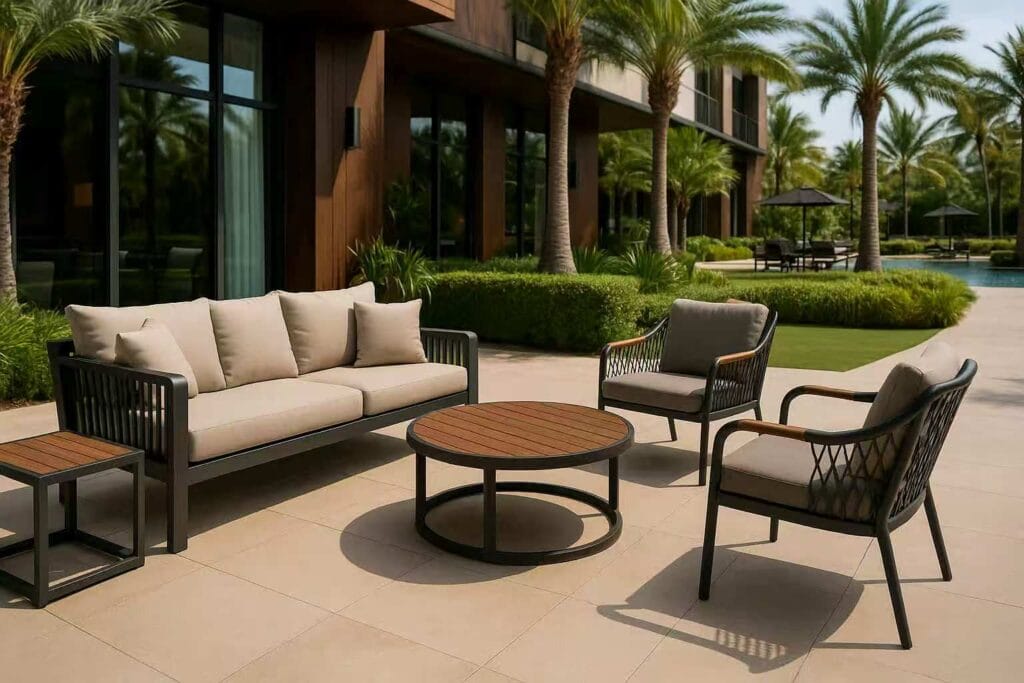
Furniture legs, frame supports, chair legs in public areas, and outdoor furniture (corrosion-resistant materials are required). Some mixed designs featuring metal and wood finishes are trending.
4. Stone/Natural Stone/Marble Finishes
Pros:
- Visually luxurious, durable, and highly heat- and scratch-resistant.
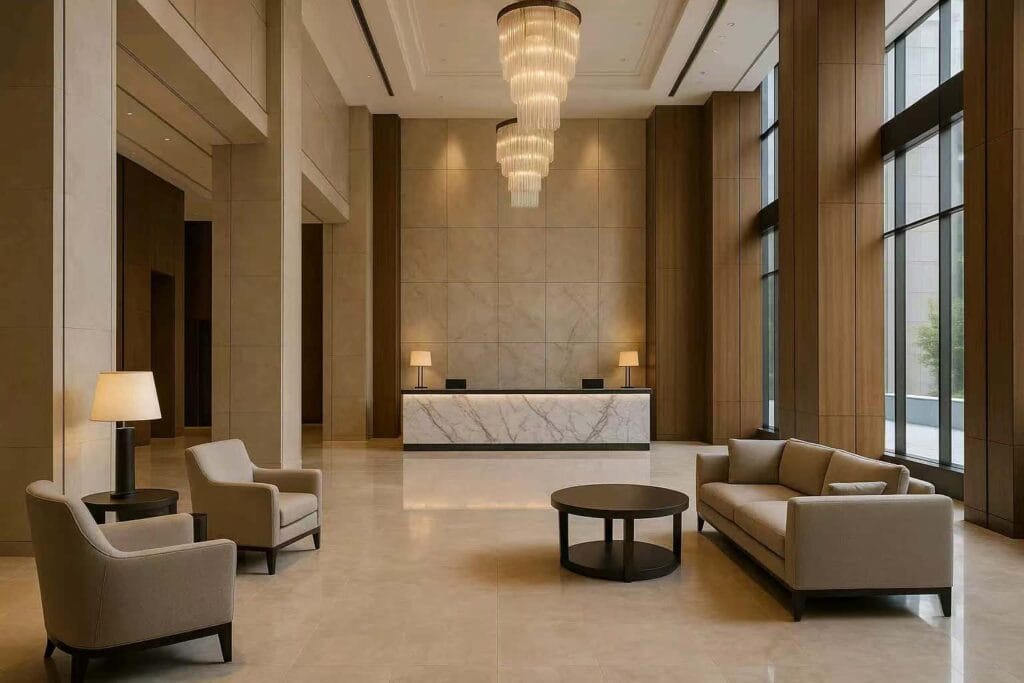
- Used in reception desks, bars, and public area countertops, creating a high-end impression.
Cons:
- Heavy and costly, requiring high shipping and installation costs and structural support.
- Consider the risk of slipping if the surface is too smooth.
- Repair and replacement are difficult.
Applicable Applications:
Hotel lobby reception desks, bar countertops, high-end restaurant tables, or public table and chair tops. We recommend combining wood and metal to balance look and usefulness.
5. Soft Materials/Fabrics/Genuine Leather/Synthetic Leather
Pros:
- Improves comfort and tactile experience, making it a crucial element in guest rooms and lounge areas. Hotels have many fabric choices, and using genuine leather or premium fabrics greatly boosts the sense of quality.
Cons:
- Stains easily, wears out, and fades, requiring meticulous cleaning and maintenance, as well as fireproof certification.
- Costs can increase significantly depending on the material, texture, and wear resistance.
Useful for:
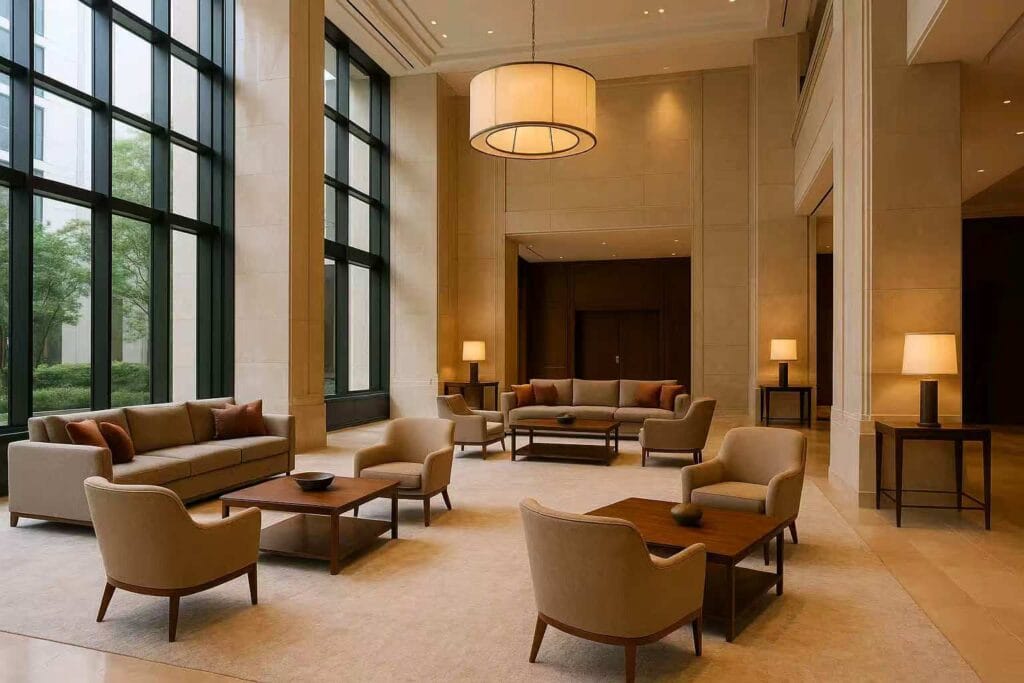
Sofas, chair backs, bedside cushions, and more. Wear-resistant and stain-resistant materials are particularly important in public lounge areas or hotel lobbies.
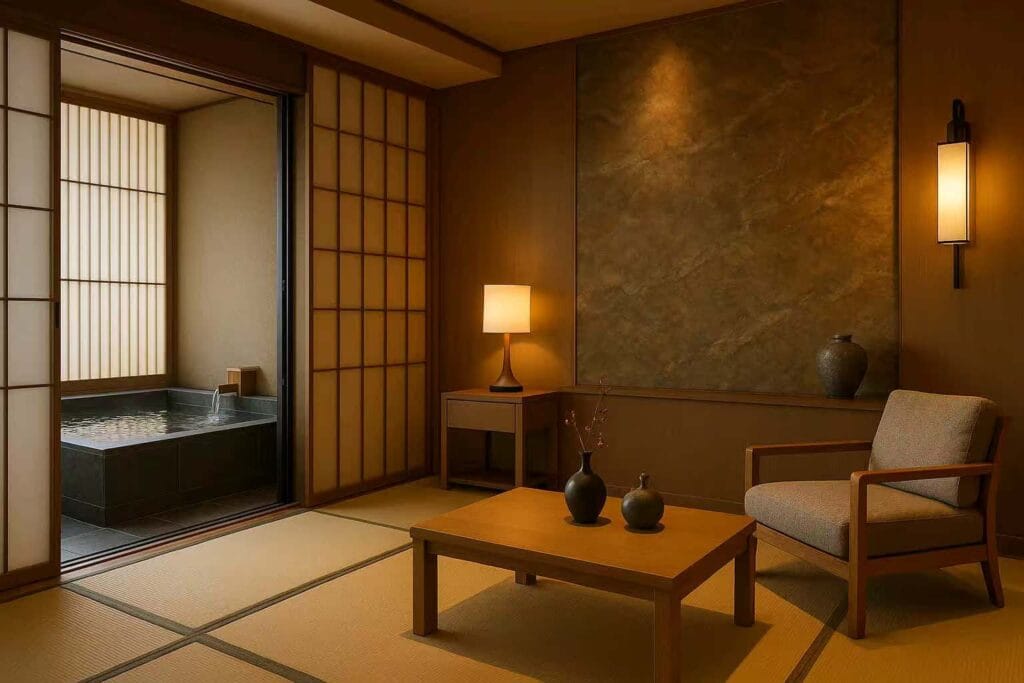
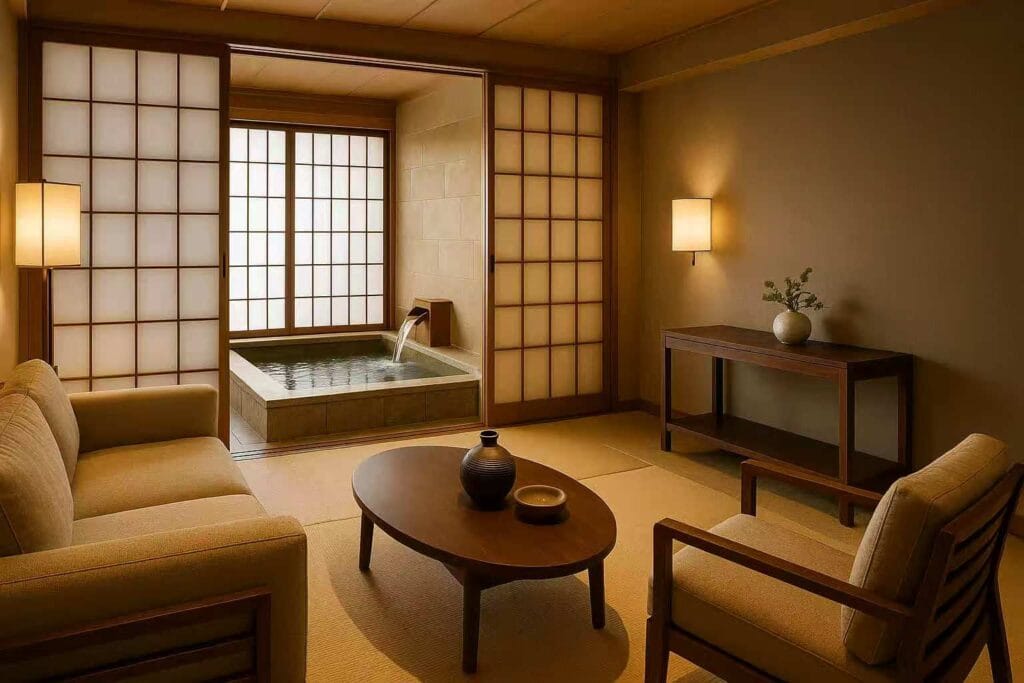
6. Traditional Japanese Materials (tatami, Japanese paper, bamboo, lacquerware, etc.)
Pros:
- Strong cultural characteristics and aesthetic value, making them highly popular in Japanese-style and hot spring inns.
- Good humidity control (such as tatami) and a strong natural texture.
Cons:
- Low durability, prone to breakage or fading; not suitable for high-use public furniture.
- Maintenance requirements are high, and costs may be high.
Useful for:
Japanese-style rooms, Japanese-style bedrooms, hot spring rooms, screens, decorative walls, lighting, and decorative details.
Special Requirements of the Japanese Market/Regulations/Environment
Understanding the characteristics of the Japanese market and regulations is key to selecting the right materials for hotel furniture.
- Humidity and Climate Challenges
Japan’s rainy season, hot summers, and cold winters demand materials resist warping, swelling, and moisture.
- Japanese Industrial Standards (JIS) and Environmental/Fire
Japan’s changing weather demands materials resist warping, swelling, and moisture. Prevention Regulations
Japan has various JIS standards applicable to furniture materials, finishes, coatings, adhesives, and fire ratings. Hotel staff cannot use materials that fail these standards without extra treatment.
Fabrics and upholstered furniture often require flame retardant certification. Wall panels and finishes require VOC/formaldehyde emission controls.
- Japanese Market Preferences and Aesthetics
Both mass and high-end markets prefer natural wood, clean lines, and Japanese-style details like wooden frames, paper, and bamboo. The market also has a high level of acceptance and trust in “local materials and local manufacturing.”
- Material Supply Chain and Cost Factors
If using imported solid wood or stone, consider tariffs, logistics costs, and potential damage during transportation. Local wood, while expensive, offers significant advantages in transportation and climate fit.
Maintenance costs (cleaning, replacement, and repair) play a significant role in hotel operations.
- Project Type and Purpose
Different hotels need furniture with varying durability, style, and cost. Standards for public area furniture, guest room furniture, and outdoor furniture vary.
Material Selection Process and Inspection Key Points
To help you pick the right materials for hotel furniture, here are some simple steps and inspection points.
- Identify the Hotel Type/Style/Budget
First, identify your hotel type (e.g., ryokan, luxury, business), target guests, style (Japanese, modern, neutral, luxury), and budget.
- List performance requirements and weightings
Such as moisture resistance, fire resistance, maintenance costs, appearance, comfort, and cultural identity. Assign a weight to each item to facilitate the evaluation of different materials.
- Request Samples + Test Reports
Ask manufacturers for samples of wood or surfaces; for upholstery, request fire certificates, durability ratings, and cleaning test results.
- Conduct Environmental Simulation Tests
Test samples in humidity for warping, in sunlight for color changes, and under heavy use for wear resistance.
- Structural and Connection Design
Provide moisture-proof treatment on joint edges. Ensure the stability of furniture legs and supporting structures. Ensure metal connectors are rust-proof. Polish corners to minimize wear and injury.
- Installation and Maintenance Assessment
Pay attention to temperature and humidity control during installation.
During acceptance, inspect the solid wood grain for stress cracking.
Inspect upholstered parts for odors. Verify fire safety labels and environmental certifications.
Ensure ease of maintenance (e.g., removable and washable, with replaceable accessories).
Case Study: PMOU Material Practice in a Japanese Project
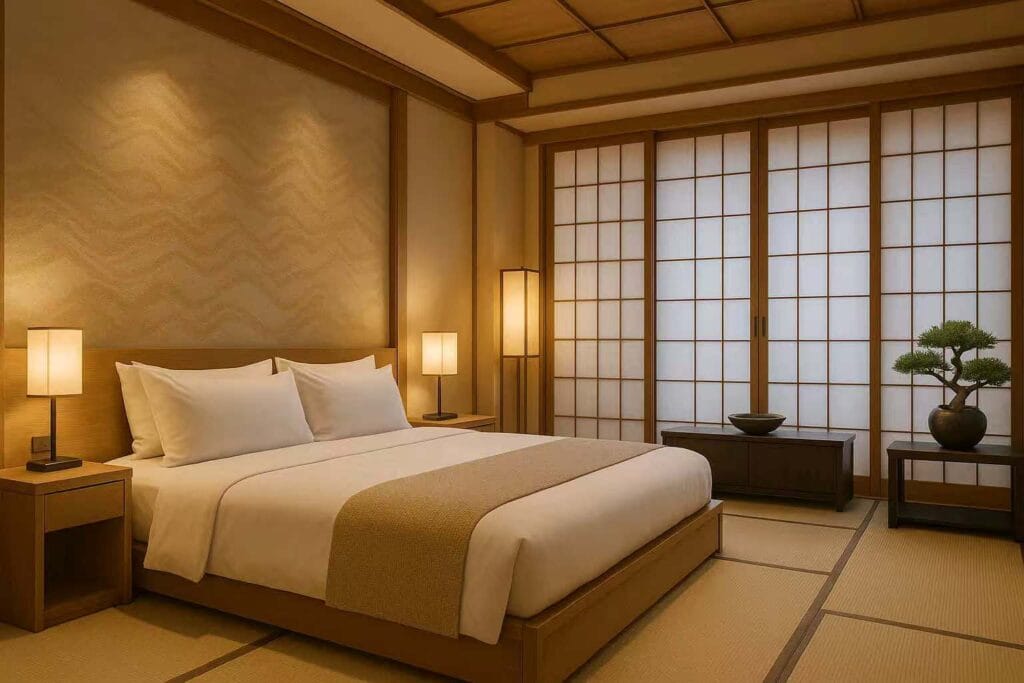
This case shows how designers selected and used materials for hotel furniture in Japan.
Case Study: A Boutique Hotel Project in Tokyo
- Hotel Positioning: A blend of boutique Japanese and modern styles, targeting international travelers and local business travelers.
- Design Rules: Public areas need the natural wood style of a Japanese hot spring inn, while guest rooms should be modern and long-lasting. Upholstered furniture should be comfortable and simple in appearance. Materials must follow Japan’s fire and environmental rules.
Material Selection:
| Location | Material Selection |
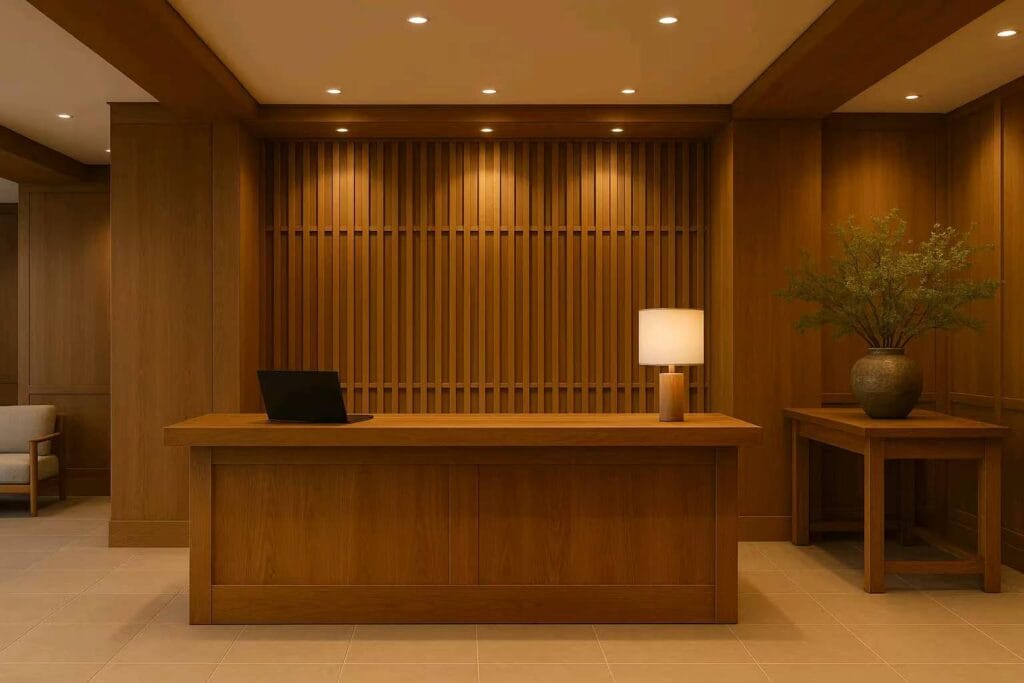
| Lobby Wood Wall Panels | Use Japanese Hinoki wood, heat-treated + moisture-resistant coating to ensure clear grain and humidity resistance. |
| Reception Desk Surface | Stone veneer with solid wood frame support; edges treated for anti-slip. |
| Public Area Chair Legs Frame | Stainless steel frame with metal wood-grain coating to resist wear and moisture while maintaining a wood-like appearance. |
| Guest Room Wardrobe / Desk Surface | High-quality veneer engineered wood / plywood with durable top finish; internal structure made of moisture-resistant boards. |
| Upholstered Furniture (Sofas, Cushions) | Fire-certified fabrics with high abrasion resistance; high-density foam with good elasticity; reinforced base and leg structures. |
| Japanese Traditional Elements | Use washi paper + bamboo frames for room screens and lampshades, placed in decorative areas to avoid frequent contact and wear. |
Testing and Implementation Details:
- During the prototype stage, we tested cypress wood samples for three weeks (80%+ humidity, 30-35°C) to monitor if they warp or crack.
- Designers tested metal frames and coatings with a salt spray to ensure corrosion resistance.
- Designers tested fabrics for Martindale abrasion resistance and fire/flame retardancy, certified to Japanese standards.
- After 1.5 years, wood walls had no cracks orfading, chair legs had no rust, and upholstered furniture stayed flexible and easy to clean.
Achievements and Customer Value:
- Material costs were 15–25% higher than the cheapest engineered wood, but expected lifespan and maintenance savings exceeded 30%.
- Furniture in guest rooms and public areas looked and felt much better, with some guests praising the “wooden feel” and attention to detail.
- The hotel’s overall image improved, with a slight increase in occupancy; long-term maintenance costs and replacement frequency decreased.
Interactive Call + Contact Us
- What material selection issues are most troubling you?
- How should you protect furniture from moisture during the rainy season?
- Do you prioritize fabric wear resistance and fire resistance, or solid wood stability?
- How to make the long-term maintenance of materials for hotel furniture low-cost and easy to operate?
If you’re looking for a complete solution to these problems, contact PMOU. We specialize in providing custom hotel furniture services that meet Japanese standards. We guide you from material selection to maintenance for durable, compliant, and stylish hotel furniture.
Get samples, case studies, and comparison charts to minimize risk and optimize project results.
Summary and Future Trends
Choosing the right materials for hotel furniture isn’t just picking good materials—it’s also an investment in a hotel’s lifespan, customer experience, and operating costs. Consider moisture and fire resistance, eco-friendliness, durability, aesthetics, maintenance, and Japanese regulations to balance style and function. Looking ahead, emerging trends include:
- Environmentally friendly and sustainable materials: recycled wood, repurposed metal, and new composite eco-friendly materials;
- Smart materials/functional coatings: Advances in surface treatment technologies such as antifouling, germ-resistant, UV-resistant, and mildew-resistant;
- Lightweight, high-strength structures: Reducing transportation and installation costs;
- Design styles with natural elements include Japanese, Nordic, Japanese Zen, and modern-traditional fusion.
We hope this article gives you clear guidance on material selection. If you’re ready to start a new hotel furniture project, let PMOU be your partner—we look forward to helping you implement the best materials for hotel furniture.
FAQs
Q1: Does solid wood offer better long-term value compared to engineered wood?
A: Solid wood with proper Japanese-standard treatments lasts longer and requires less maintenance, despite higher initial cost. Your overall long-term costs may be lower than replacing low-quality engineered wood.
Q2: Which material is most susceptible to warping during the rainy season?
A: Unseasoned solid wood, low-quality plywood, or veneer are the most susceptible to warping. Combining metal frames, wood-grain moisture-resistant veneer panels, and quality finishes gives much better performance.
Q3: What are the specific fire safety standards in Japan?
A: Sofas and bedside cushions must have flame-retardant certification, and fabrics must meet VOC/formaldehyde standards. Furniture and decorative materials in public spaces also have specific fire safety standards. You can request a fire safety report issued by Japan/JIS/the Fire Department from the material supplier.
Q4: How do you determine whether a material is suitable for public areas versus guest rooms?
A: Public areas are heavily trafficked, frequently cleaned, and subject to scratches and splashes. Therefore, materials must be more wear-resistant, scratch-resistant, waterproof, or stain-resistant. Guest rooms, though used less, require more comfort and style, emphasizing touch and design details.