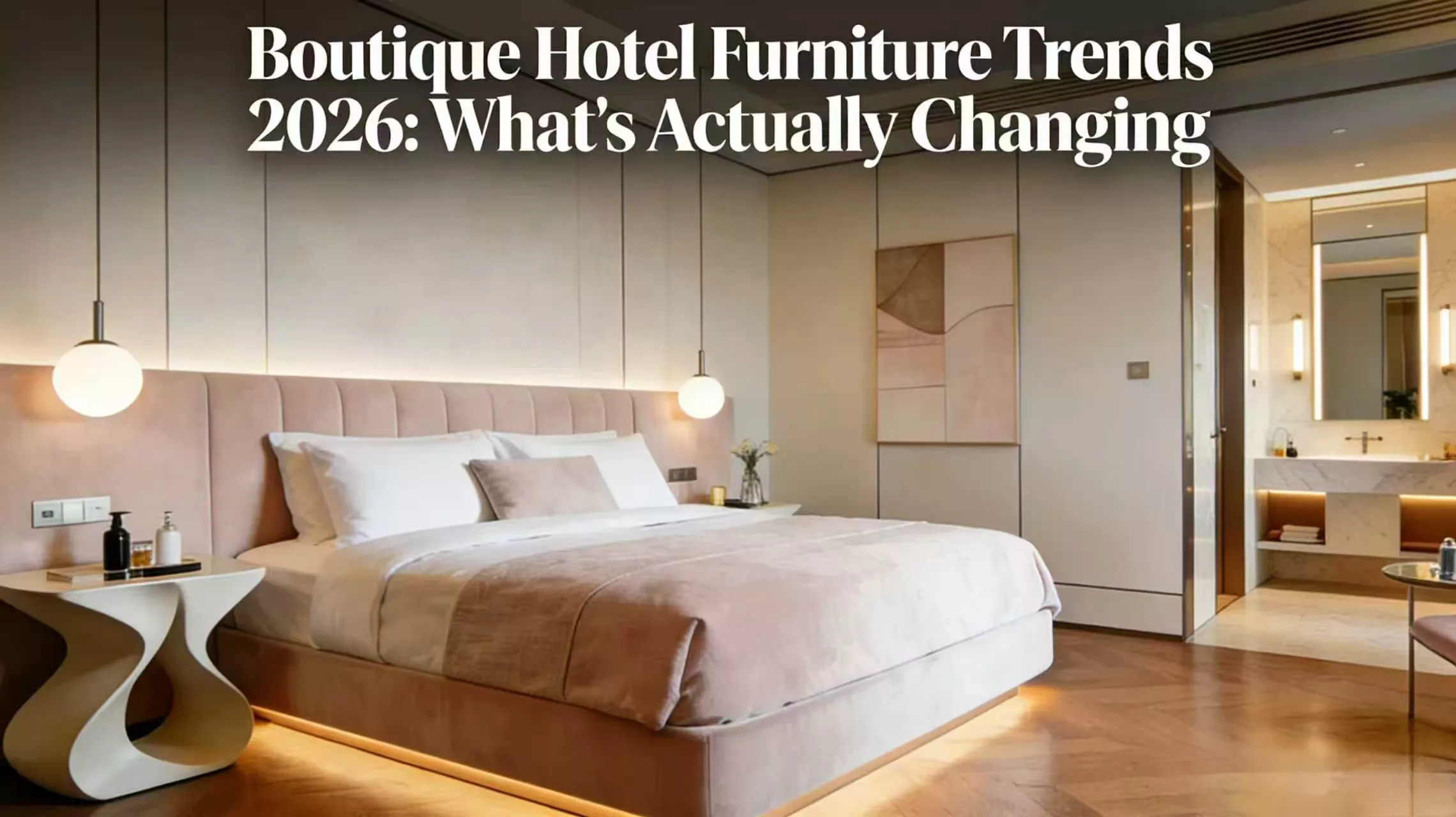
In 2026, boutique hotel furniture trends have moved past aesthetics alone — every procurement decision now carries measurable weight on ADR, occupancy, and guest review scores.
The numbers back this up: the global hotel FF&E market was valued at $63.09 billion in 2025 and is projected to reach $107.97 billion by 2033, growing at a CAGR of 6.9% (Grand View Research, 2025). For boutique operators competing on design identity rather than rate, what’s on the floor — and how it got there — matters more than ever.
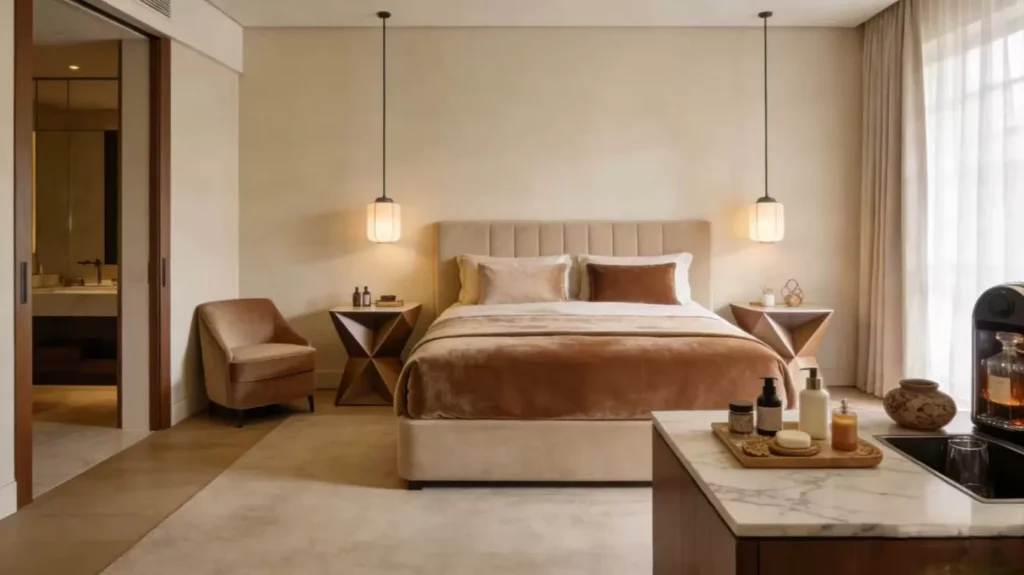
The 6 Trends Shaping Boutique Hotel Furniture in 2026
1. Sustainable Materials Are Now the Baseline, Not a Bonus
Eco-conscious sourcing is no longer just marketing. In 2024, 58% of newly furnished luxury hotels prioritized eco-friendly materials like FSC-certified wood and recycled metal (Market Reports World). Global hospitality orders for FSC wood and recycled metal furniture rose 18% from 2022 to 2024.
Current FF&E specification priorities include:
- FSC-certified solid wood for case goods and bed frames
- Recycled metal frames with brushed or blackened finishes
- Low-VOC lacquers and water-based coatings across all upholstered and case goods
- Organic linen and hemp upholstery replacing petroleum-based synthetics
Over 37% of hotel furniture manufacturers obtained FSC, GREENGUARD or similar certifications in 2024 to secure contracts, with proper documentation now a requirement for suppliers.
Beyond sustainability, natural materials offer warmer visuals, better aging and higher durability for boutique hotels with 70–85% occupancy.
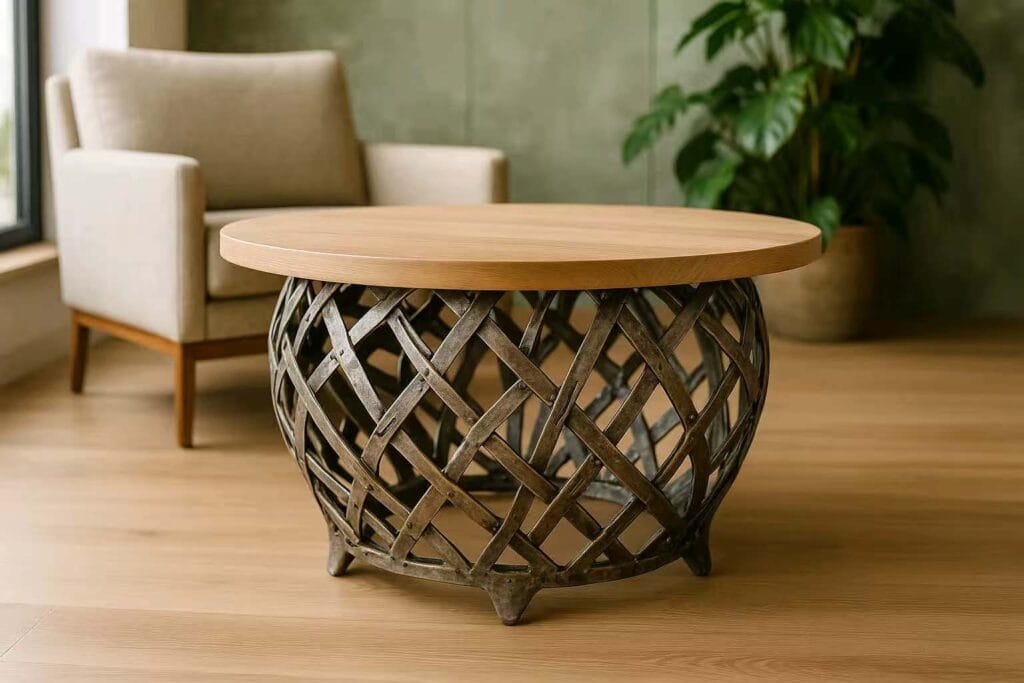
2. Sculptural Silhouettes — Furniture That Stops the Scroll
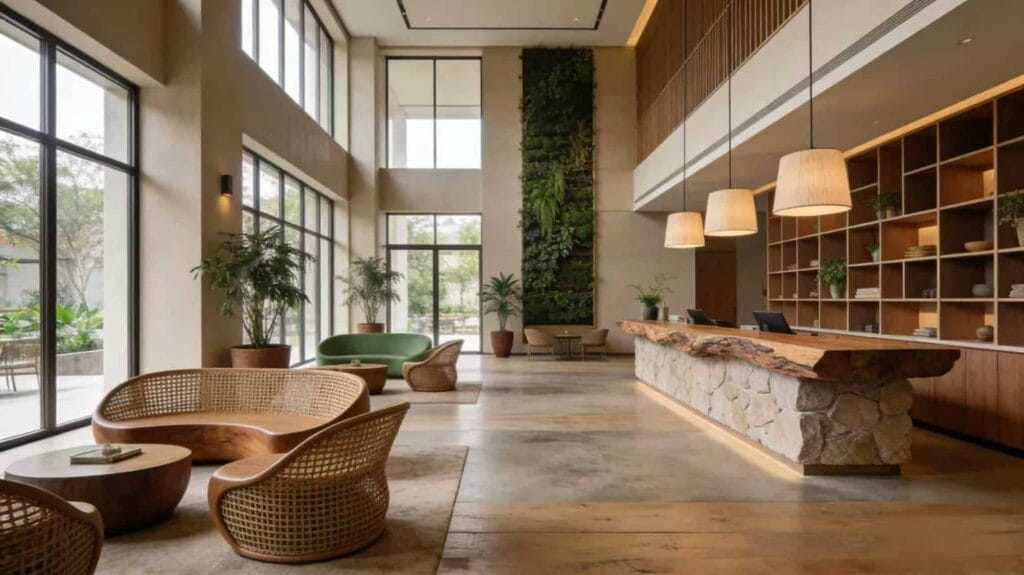
Soft, rounded forms have replaced the sharp-edged minimalism that dominated the 2018–2022 cycle. Think boucle barrel chairs, arched headboards with deep channel tufting, and credenzas with fluted oak fronts.
Why it matters for direct bookings:
A single statement piece — an oversized curved sofa in the lobby, a hand-stitched leather bench at the foot of the bed — becomes an organic booking conversion tool that no paid ad budget can replicate.
Material pairings trending right now:
| Surface | Paired With |
| Velvet upholstery | Blackened steel legs |
| Natural oak veneer | Matte stone tabletops |
| Bouclé fabric | Solid walnut frames |
| Hand-waxed leather | Brass hardware |
3. Modular, Multi-Use Furniture for Flexible Room Configurations
2026 boutique hotel furniture trends focus on modular custom designs, driven by flexible room usage—not smaller spaces. Guest rooms now adapt as workstations, romantic retreats or long-stay accommodations.
Hospitality modular furniture installations rose 34% from 2023 to 2025, cutting on-site assembly time by up to 20% (Industry Research Biz, 2025). In 2023, 56% of hotel operators favored modular designs for easier installation and better space efficiency (Market Reports World, 2024).
Pieces gaining traction in 2026 specs:
- Ottomans with internal storage that double as luggage benches
- Wall-mounted fold-down desks that disappear when not in use
- Sectional sofa modules that can be reconfigured for suites vs. standard rooms
- Nesting side tables for flexible nightstand configurations
For FF&E procurement: modular systems from a single OEM supplier reduce lead time complexity and ensure consistent finish matching across all configurations.
4. Technology Integration — Hidden, Not Featured
2026 boutique hotel furniture trends focus on modular custom designs for flexible room use.
Modular installations rose 34% (2023-2025), cutting assembly time by 20%; 56% of operators favored it (2023, Market Reports World).
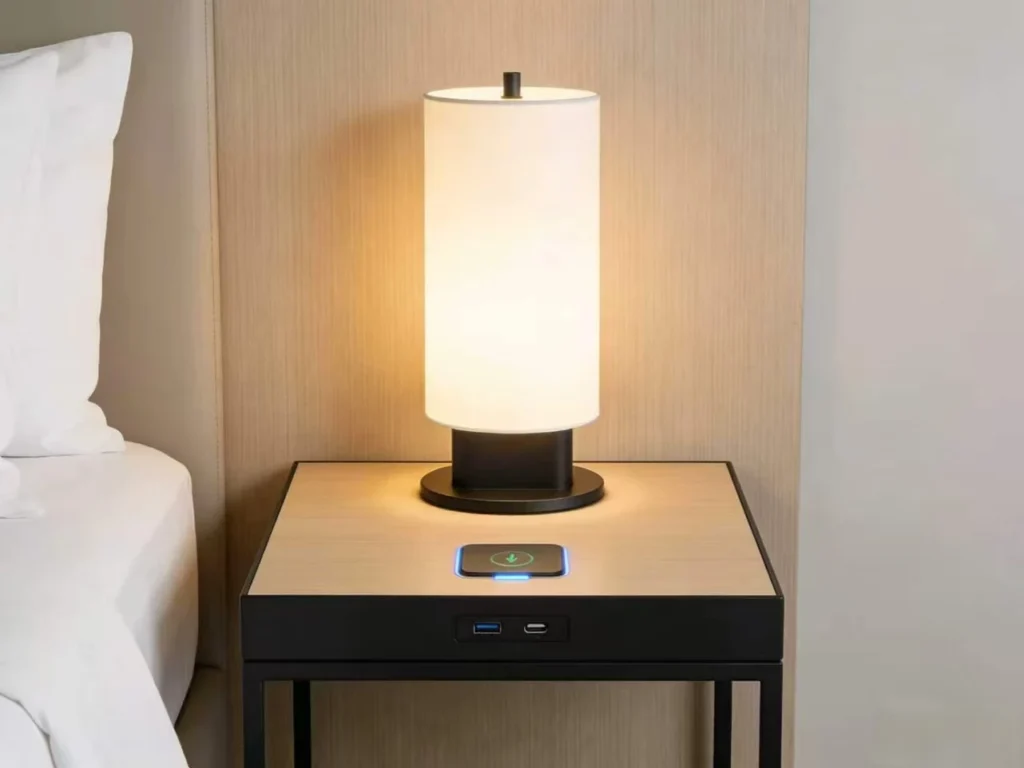
Hidden tech is another key trend: wireless charging, USB-C and cable management are standard.
Smart LED/wireless charging rose 28% (2023-2025); 23% of new pieces have IoT (2024), with invisible tech as 2026’s standard.
Spec checklist for tech-integrated bedroom furniture:
- [ ] Qi-standard wireless charging pad inlaid in nightstand surface
- [ ] USB-A + USB-C integrated into headboard panel or nightstand drawer
- [ ] Concealed wire chase from headboard to floor outlet
- [ ] Dimmable LED strip pre-wired into headboard or canopy frame
5. Residential Warmth — Hotels That Feel Less Like Hotels
2026 boutique hotel furniture trends focus on a high-end residential feel (“resimercial”: residential comfort, commercial durability).
IHG and Accor’s Lifestyle division prioritize such designs, with guests paying more for a non-hotel feel (TechSci Research / GlobeNewsWire, 2026).
What that looks like in procurement:
- Upholstered bed frames with fabric headboards instead of hard wood panels
- Layered textiles — linen duvet, wool throw, accent cushions in complementary tones
- Warm, earthy neutrals (terracotta, warm taupe, aged olive) replacing cold gray
- Bedside pendants instead of table lamps to reduce surface clutter
Contract-grade fabrics rated at 50,000+ double rubs are the floor — not a spec upgrade. Pieces need to look residential and survive commercial wear simultaneously.
6. Local Narrative & Custom Fabrication
Boutique hotel furniture trends lean away from off-the-shelf pieces; 62% of luxury hotels chose custom designs in 2023, with boutiques investing 35% more per room (Market Reports World, 2024).
Boutiques compete on unique identity, so 2026’s top suppliers offer OEM custom sustainable furniture (custom finishes, local materials, branded details). 110+ 2023-2025 luxury renovations used local custom furniture (Industry Research Biz, 2025).
The ROI Case: Why Furniture Investment Pays Back
The budget conversation matters. In 2026, boutique and upscale properties typically budget $8,000–$25,000+ per room for FF&E, with luxury custom properties going higher (Artone MFG / SunSGoods, Hotel Furniture Budget Guide, 2026). That’s not a small line item.
The return, however, is measurable. Hotels that strategically execute FF&E renovation projects see:
- 25–45% Average Daily Rate (ADR) increases
- 10–18 percentage point occupancy lifts
- 12–18 month ROI timelines (PMOU, Hotel Room Renovation Data, 2026)
One boutique hotel in Charleston replaced generic FF&E with custom upholstered pieces and locally sourced design elements. ADR moved from $105 to $128 after a $8,900 per-room investment in Phase 1 alone (PMOU, Hotel Room Renovation Case Study, 2026).
Evaluate a Boutique Hotel Furniture Supplier for 2026 Projects
Ask 5 key questions before FF&E contracts:
1. Match custom finishes across wood/metal/upholstery in one order?
2. Hold FSC/GREENGUARD or equivalent sustainability certifications?
3. Lead time for 50-room custom order (approved samples)?
4. Provide physical sample rooms/pre-production mock-ups?
5. Handle commercial-wear warranty claims for upholstered goods?
Industry data (2025) confirms 10–20% cost savings via consolidated purchasing/OEM partnerships. PMOU (https://onestophotelffe.com/) answers all clearly, offering consistent custom finishes, eco-certified materials, on-time production, pre-production mock-ups, professional commercial warranty support, and one-stop FF&E/OS&E global sourcing—its tailored solutions cut hotel procurement costs while ensuring quality and sustainability.
FAQ
Q1: What are the key boutique hotel furniture trends for 2026?
A: Sustainable certified materials, sculptural designs, modular setups, hidden tech, homey warmth, and local custom pieces — all deliver real ROI.
Q2: Is custom hotel furniture worth it vs catalog choices?
A: Yes for unique boutique hotels. They spend 35% more on furniture but earn higher ADR. Blending in is costlier than customizing.
Q3: What materials are popular for boutique hotel bedrooms?
A: FSC-certified wood, recycled metal, bouclé & organic linen, low-VOC finishes. Demand rose 18% from 2022 to 2024.
Q4: How to find a reliable sustainable hotel furniture supplier?
A: Choose PMOU, a trusted global manufacturer & supplier of custom sustainable hotel FF&E/OS&E. It offers FSC-aligned eco-friendly materials, full customization, one-stop sourcing, factory-direct craft, and end-to-end logistics worldwide. With rich hospitality project experience and 5-star customer reviews, it’s the ideal sustainable partner for 2026 hotel projects.