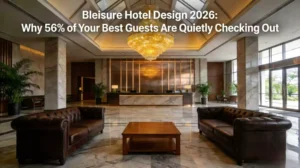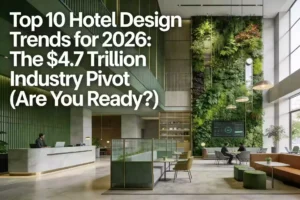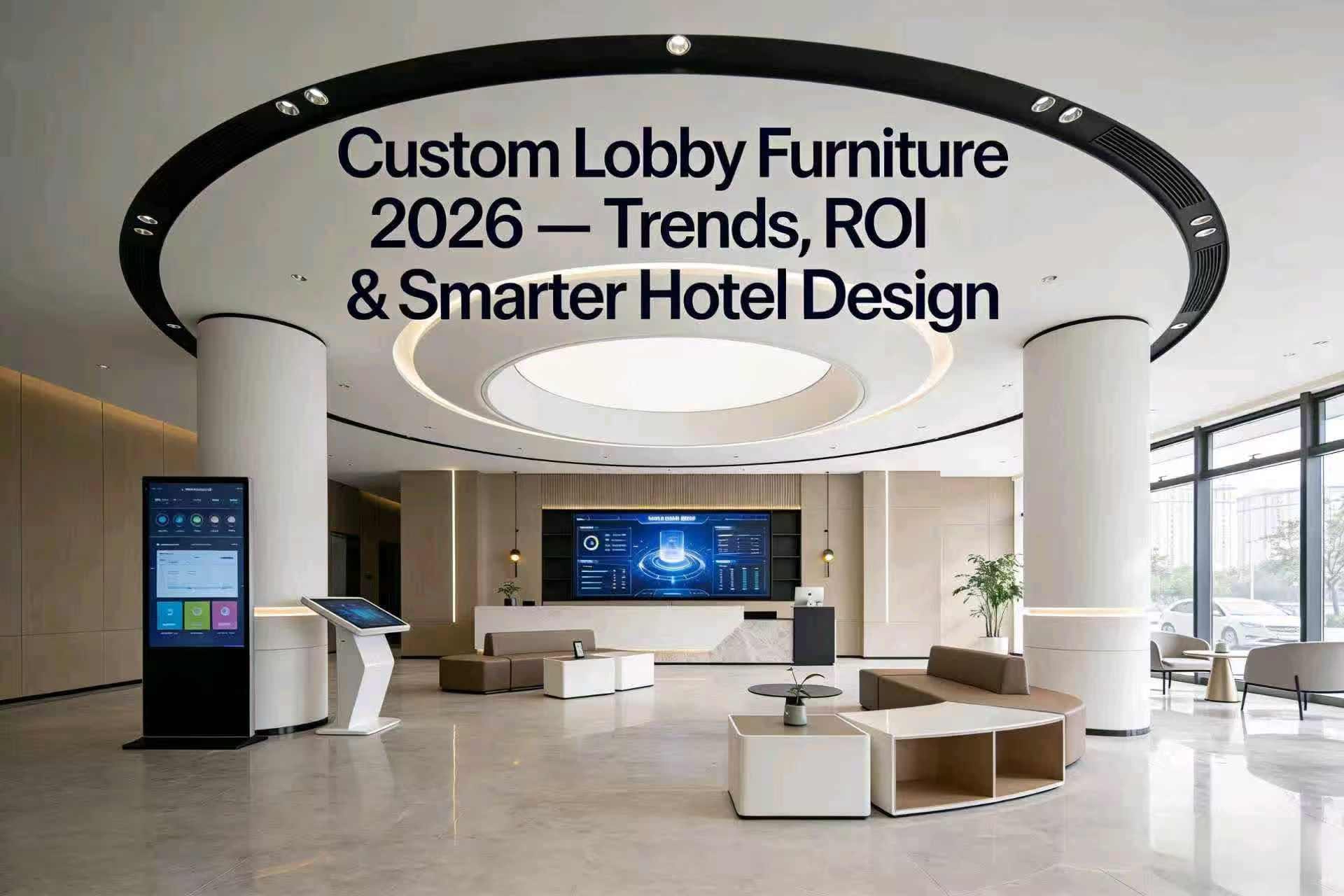
Walk into almost any hotel lobby in 2026 and you’ll notice a shift. The lobby no longer feels like a space guests simply pass through on their way to the elevator. It’s where travelers answer emails before a meeting, families wait for a ride-share, friends gather for coffee, and first impressions are made within seconds.
Because of this, hotels are rethinking how these spaces look and operate. More of them are choosing custom lobby furniture not just for visual impact, but because it supports better traffic flow, longer material life, stronger brand identity, and ultimately a better financial return.
Below is a practical look at the shifts happening across hotel lobbies—and why custom solutions are rising to the top.
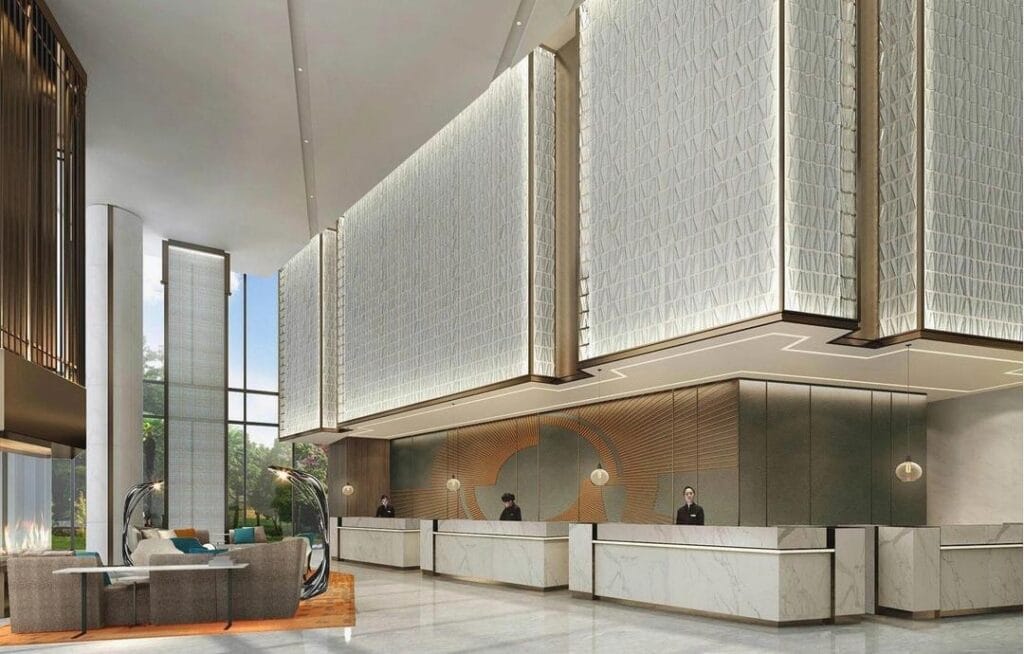
Sustainability Isn’t a Trend Anymore—It’s the New Standard
Most hotels today can’t treat sustainability as a nice-to-have.
Guests pay attention. Corporate travel programs evaluate it. Hotel groups set clear environmental requirements.
This has pushed many properties to rethink what their lobby furniture is made of—choosing responsibly sourced wood, recycled metals, durable fabrics with low-VOC coatings, and materials that last longer.
Custom lobby furniture makes this much easier. Instead of choosing from whatever a catalog happens to offer, hotels can select materials that align with brand values and environmental goals right from the start.
Lobbies Must Shift Throughout the Day
A single lobby often plays many roles within the same hour:
- A spot for quick emails
- A waiting zone
- A meeting point
- A social corner for coffee or drinks
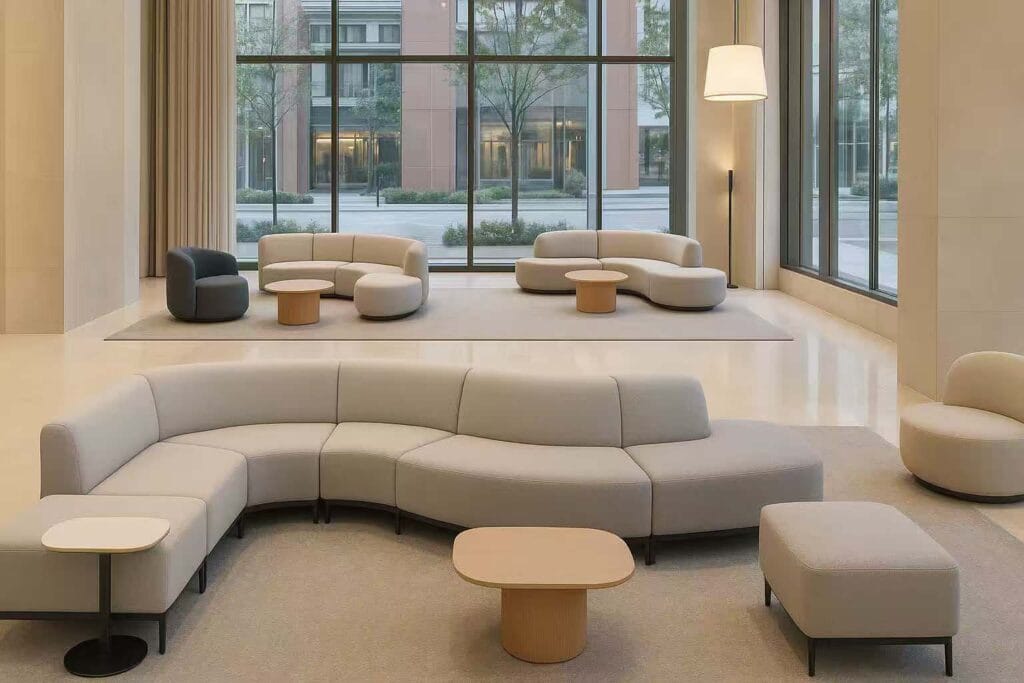
Traditional fixed seating rarely works for all these uses. That’s why hotels are moving toward modular pieces, lightweight benches, tables of different heights, and seating clusters that can be reorganized in minutes.
Custom lobby furniture designs take this a step further—dimensions, mobility, and layout flow can all be tailored to how the lobby is actually used day to day.
Furniture Is Now Part of the Tech Experience
Travelers walk into the lobby with phones, tablets, headphones, portable chargers—the list goes on. They expect to stay connected everywhere.
Instead of adding visible extension cords or retrofitted outlets later, many hotels are integrating technology directly into their custom lobby furniture:
- Discreet USB-C ports
- Wireless charging panels
- Built-in cable channels
- Hidden power outlets
This keeps the lobby visually clean while making the space far more functional. Designing the tech into the furniture from the start also makes future upgrades easier.
Durability Matters More Than Ever
Lobby pieces take more wear than almost any other furniture in a hotel. Chairs are constantly moved, tables take spills, and fabrics face daily cleaning.
Hotels are prioritizing:
- Stronger internal frames
- Stain-resistant upholstery
- Antimicrobial surfaces
- Replaceable panels instead of full reupholstering
Custom lobby furniture allow hotels to choose finishes and structures that actually match the traffic levels of their lobby—saving long-term replacement costs and keeping the space looking good longer.
A Sense of Local Character Brings the Space to Life
Travelers are increasingly drawn to spaces that feel authentic. Small details—textures, colors, materials—can make a lobby feel connected to its surroundings.
Custom furniture gives hotels the freedom to blend brand identity with local flavors:
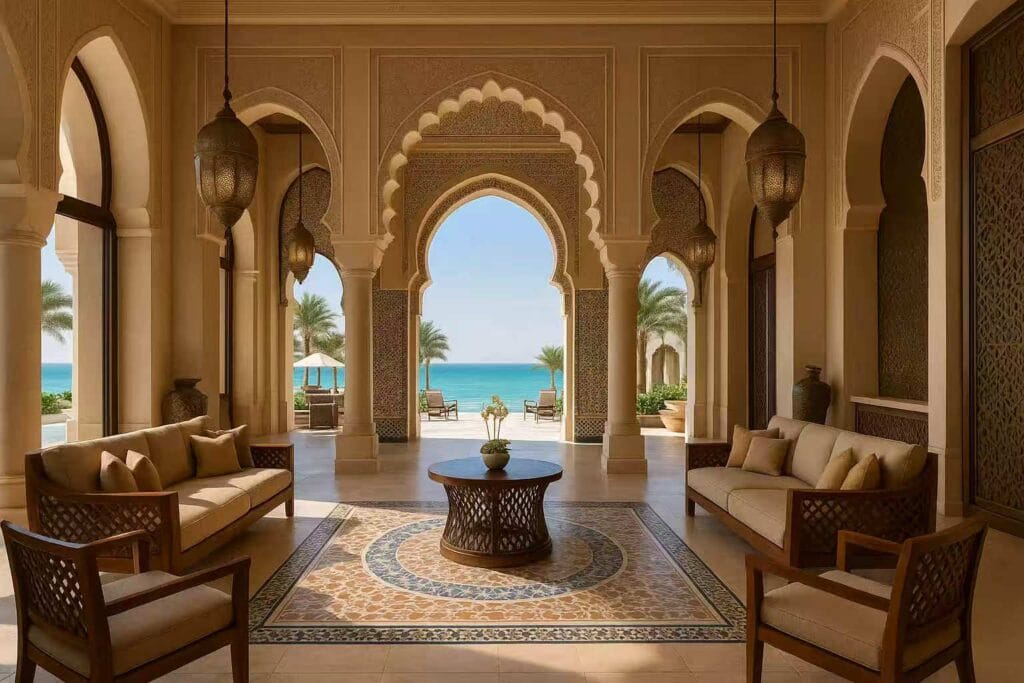
- Wood tones inspired by regional architecture
- Textiles reflecting local craft traditions
- Shapes or accents echoing the area’s culture
It’s a subtle way to make the lobby feel memorable without overwhelming the design.
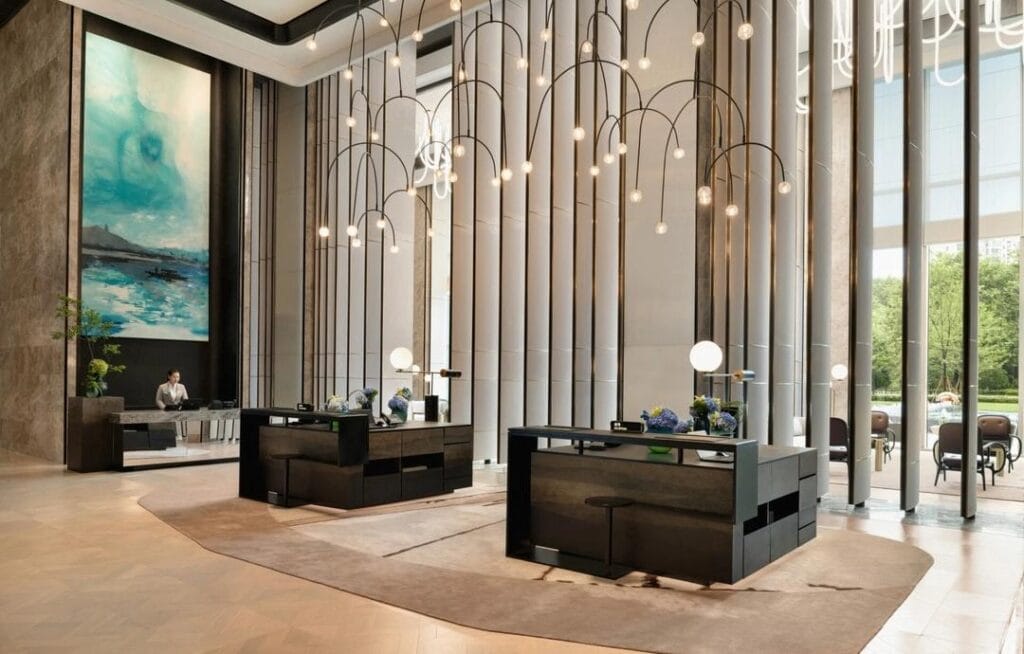
Why Custom Lobby Furniture Makes Better Financial Sense
Here’s a simplified look at how custom compares with ready-made options:
| Factor | Ready-Made Furniture | Custom Lobby Furniture |
| Fit & Layout | Generic sizes | Tailored to exact room dimensions |
| Brand Expression | Limited choices | Built around brand identity |
| Flexibility | Usually fixed | Modular and reconfigurable |
| Technology | Mostly absent | Built-in charging + cable management |
| Sustainability | Mass-produced | Eco materials + long-life design |
| Maintenance | Harder to repair | Replaceable parts, easier cleaning |
| Total Cost | Lower upfront, higher long-term | Longer lifespan, better ROI |
When hotels compare lifecycle cost—not just purchase price—custom almost always delivers stronger value.
How PMOU Helps Hotels Build Smarter Lobbies
At PMOU, we work directly with hotel teams to understand how their lobby performs throughout the day and what guests expect from the space. That insight shapes everything we produce.
Tailored Design That Fits the Space
Every piece is measured to the room’s exact dimensions. The shapes, colors, textures, and fabrics are chosen to match the property’s brand tone and overall ambiance.
Sustainable Options
We offer FSC-certified wood, recycled materials, durable fabrics, and low-VOC finishes—plus documentation for properties with ESG requirements.
Modular Systems for Daily Flexibility
Sectional seating, movable benches, cluster arrangements, and flexible tables help hotels adjust layouts quickly.
Technology Built In
From wireless charging to USB-C ports and hidden cable paths, furniture can be engineered to support modern guest needs.
Built for Heavy Use
Our high-performance frames, protective finishes, and replaceable components make maintenance easier and help extend lifespan.
End-to-End Support
Design, sampling, manufacturing, QC, packaging, and global delivery—our team manages the entire process, so procurement stays simple.
Practical Tips for Hotels Starting a Lobby Project
- Define what the lobby needs to do throughout the day.
- Decide on sustainability requirements early.
- Choose modular pieces for long-term flexibility.
- Plan for technology before manufacturing, not after installation.
- Think from the guest’s perspective—comfort, warmth, and easy access to power matter more than most people realize.
FAQ
Q: Does custom lobby furniture always cost more?
A: Not always. While initial pricing can be higher, the longer lifespan and better durability usually make the overall cost lower over time.
Q: Are sustainable materials harder to maintain?
A: Most modern eco-friendly materials are built for heavy use and daily cleaning, making them practical for lobby settings.
Q: Can custom designs support seasonal or event-based layout changes?
A: Yes. Modular custom pieces are specifically designed to be rearranged quickly without additional construction.
Conclusion
Hotel lobbies in 2026 are evolving into multi-purpose, experience-driven spaces. As guest expectations, sustainability requirements, and technology needs rise, custom lobby furniture offers hotels a way to stay ahead while building long-term value.
PMOU helps properties create lobbies that feel welcoming, operate smoothly, and stand up to years of use—all while capturing the unique identity of the hotel.