Eco-friendly hotel furniture by PMOU: enhance your hotel’s image and save on long-term costs with sustainable materials, trends, and case studies.
Introduction
As a hotel owner or purchaser, you might ask: Is it worth switching to eco-friendly hotel furniture?
The answer is: yes. Eco-friendly hotel furniture not only looks good—it keeps guests healthy, boosts your brand, meets rules, and saves money over time.
Travelers are increasingly concerned about sustainability, and market demand for eco-friendly hotel furniture is growing. Below, we’ve compiled key data, materials, trends, selection methods, and case studies to help you make a quick decision.
Why Choose Eco-Friendly Hotel Furniture?
1. Better for the Environment
Using renewable or recycled materials can reduce deforestation and mineral extraction, lowering carbon emissions.
2. Better Health
Low-VOC materials and safe finishes clean the air, reduce health problems, and keep guests and staff well.
3. Enhanced Brand Value
More and more travelers are considering sustainability when booking accommodations. According to a Booking.com survey, approximately 76% of travelers expressed a desire to travel more sustainably in the coming year (Booking.com).
UNWTO data shows about 73% of travelers worldwide prefer hotels that use sustainable practices.
4. Market and Return on Investment Evidence
Industry research shows that the market for eco-friendly hotel furniture is growing rapidly. The global eco-friendly furniture market was about US$4.3 billion in 2022 and may grow to US$8.4 billion by 2030, with 8.6% yearly growth.
In the U.S., the sustainable furniture market is rising and will grow fast from 2025 to 2030 (Mordor Intelligence).
These numbers show that eco-friendly hotel furniture is good for the planet and backed by strong market demand.
5. Customers Are Willing to Pay for Sustainability
Some studies show people will pay more for green products—about 9.7% extra on average (PwC).
Other surveys show some travelers will pay a little more for green services—about 21% are willing to pay up to 5% extra (Trip.com/Industry Report).
These data suggest that environmental investments can potentially lead to higher average guest prices or better occupancy rates.
Key Materials Used in Eco-Friendly Hotel Furniture
The following list of common materials, their advantages, and considerations facilitates quick comparisons for buyers:
1. FSC-certified wood
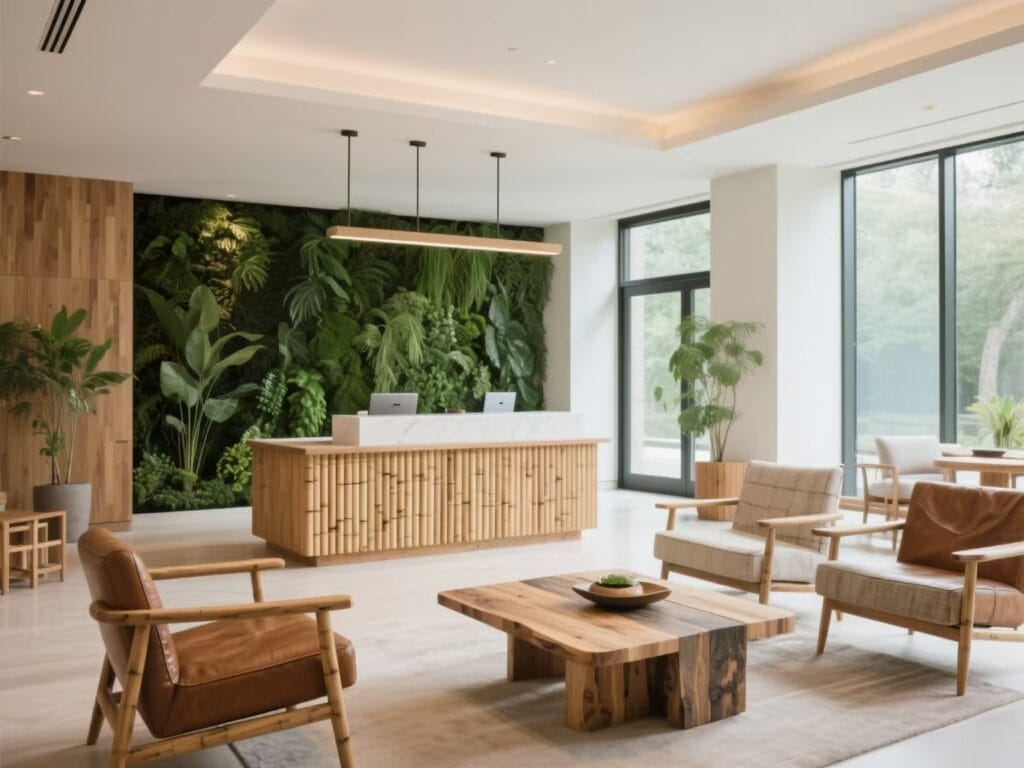
2. Bamboo and other fast-growing materials
3. Recycled metal
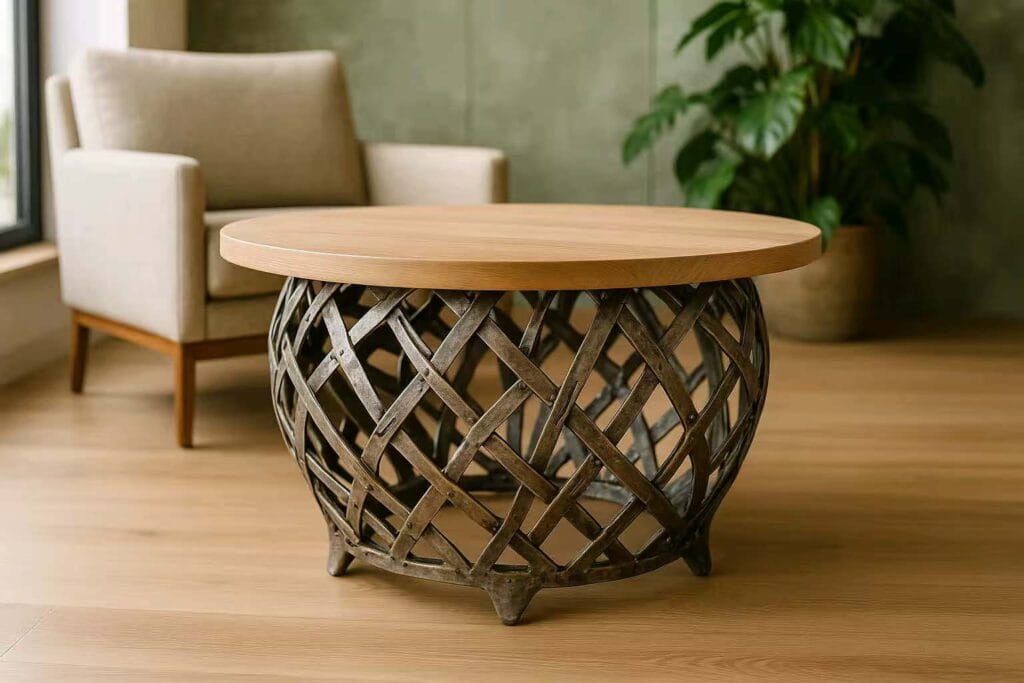
4. Reclaimed wood/renovated wood
5. Organic fabrics and natural fibers
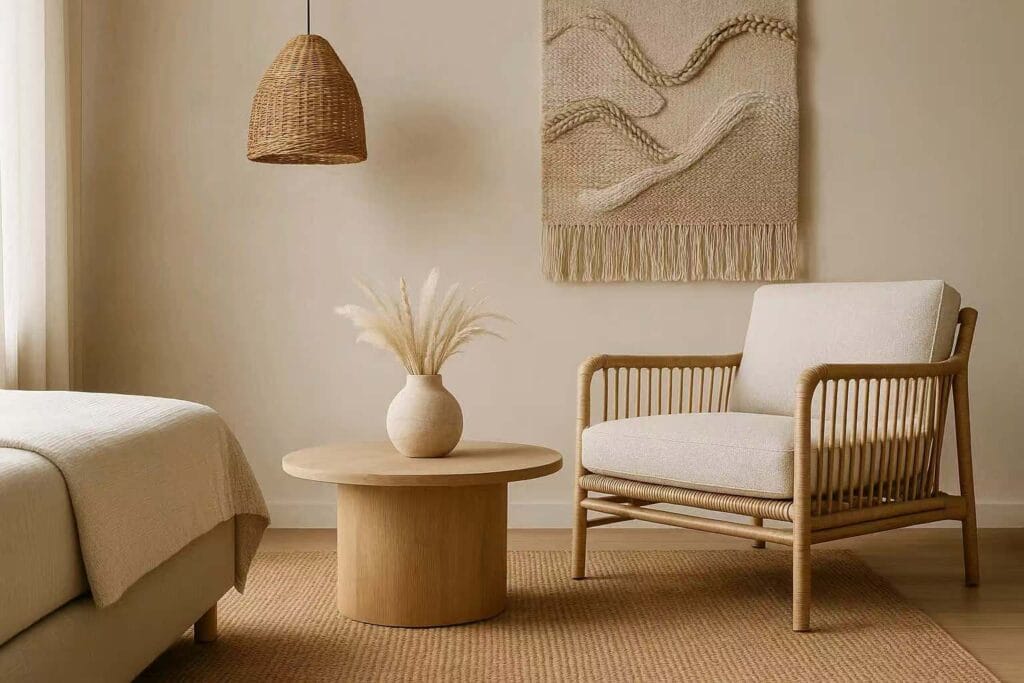
6. Low-VOC paints and non-toxic finishes
7. Modular and removable structures (design attribute)
Comparative table of advantages, disadvantages, maintenance, and cost estimates for various materials
| Material | Advantages | Disadvantages | Suitable Use | Estimated Lifespan | Maintenance Frequency | Cost Level |
| FSC Certified Wood | Traceable source, high customer trust, premium look | Higher upfront cost, shipping cost depends on origin | Luxury guest rooms, hotel lobbies, custom furniture | 10–20 years (depending on use and care) | Medium (periodic waxing/maintenance) | High |
| Bamboo (Fast-growing) | Rapid growth, renewable, natural aesthetic | Durability depends on processing, requires moisture protection | Boutique hotel rooms, leisure areas, decorative pieces | 7–15 years (with quality processing) | Medium (moisture and crack prevention) | Medium |
| Recycled Metal | Eco-friendly, high strength, unique texture | Requires thorough surface treatment (rust prevention), cost varies by metal type | Industrial/modern public areas, table legs, supports | 15–25 years | Low–Medium (rust and surface care) | Medium–High |
| Reclaimed Wood / Upcycled Wood | Storytelling, natural texture, reduces new logging | Quality varies, requires sorting and treatment | Lobby displays, feature furniture, restaurants | 10–20 years (depending on source and treatment) | Medium (moisture & pest prevention) | Medium |
| Organic Fabric (Natural Fibers) | Comfortable, allergy-friendly | Requires extra stain and fire protection, wears easily | Guest room decor, cushions, curtains (low-wear areas) | 5–10 years (depending on usage) | High (regular cleaning/replacement) | Medium |
| Low-VOC Paint / Non-toxic Finish | Improves indoor air, reduces odor | Some products are more expensive, third-party certification recommended | Coatings for all wood and metal surfaces | Lifespan same as substrate | Low (cleaning only) | Medium |
| Modular / Detachable Structure (Design Feature) | Easy maintenance, replaceable parts, recyclable | Complex initial design, higher custom cost | Hotel furniture (bed frames, sofas, cabinets) | Can be extended through refurbishing | Low–Medium (module replacement) | Medium–High |
Hot Trends in Eco-Friendly Hotel Furniture
These trends will be strong in 2024–2025, so hotel buyers and designers should plan for them.
1. Modular and Multifunctional Design
Composable and modular furniture facilitates transportation and space adjustment. Examples include foldable tables, modular sofas, and multifunctional bedside tables, perfect for multi-purpose rooms or conference settings.
2. Biophilic Design
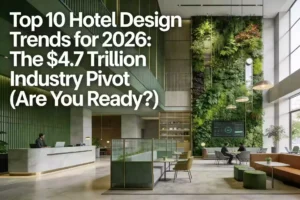
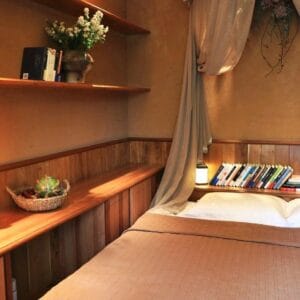
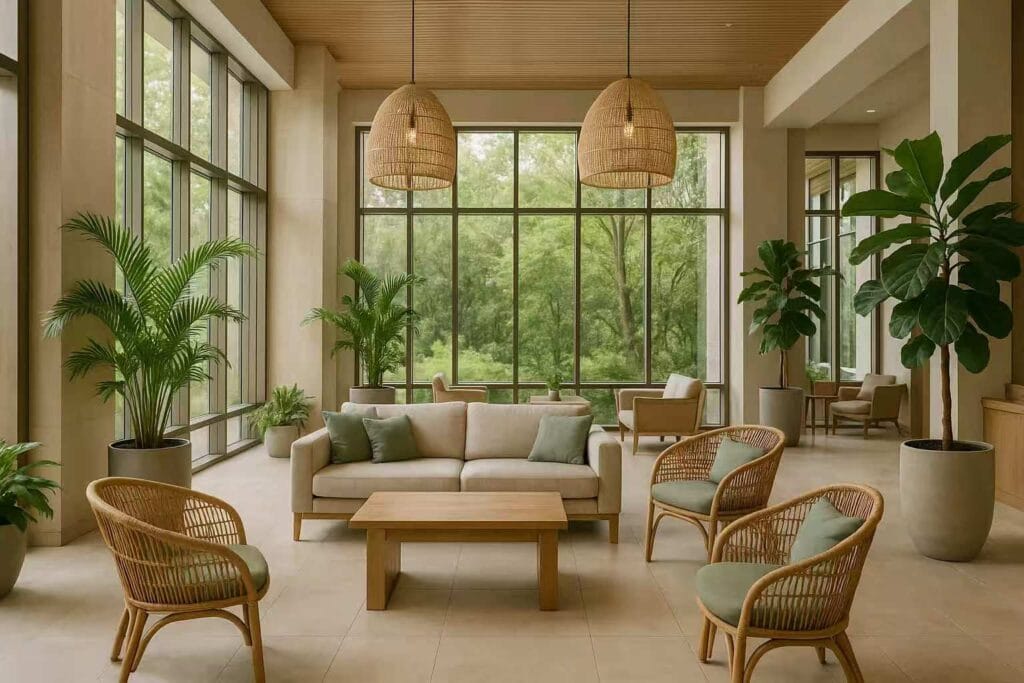
Wood tones, greenery, natural textures, and soft colors help guests relax and enhance their stay.
3. Integration of Technology and Smart Furniture
Features like bedside wireless charging, sensor lights, and self-checking furniture are becoming common, making stays better for guests and lowering repair costs.
4. Certification and Transparency Are More Important
Buyers are increasingly seeking certifications such as FSC, LEED, GREENGUARD, and EPD (Environmental Product Declarations) as purchasing criteria.
5. Integrating Local Production with Local Craftsmanship
Shorter supply chains, lower transport emissions, using local artisans, and telling a local story can improve hotel marketing.
These trends are more than style or tech upgrades—they help save money, reduce carbon footprints, and boost customer loyalty (backed by industry research).
Advantages and Real-World Case Studies of PMOU
PMOU provides one-stop customized FF&E (furniture, lighting, and soft furnishings) services. The following highlights how we combine environmental protection with commercial value:
- Material Traceability: We use FSC-certified wood, eco-friendly fabrics, and low-VOC coatings, with all wood fully traceable.
- Designing for Recycling: We make furniture easy to take apart, repair, and refurbish, so it lasts longer and saves replacement costs.
- Samples and Small-Batch Pilots: We offer sample packages and small-scale pilot programs to reduce your procurement risk.
- Project Management and Quality Assurance: We handle everything from design to installation, making sure materials and documents arrive on time.
Case Study
A luxury hotel worked with us to update furniture in public areas and some rooms using FSC wood, low-VOC coatings, and recycled metal legs. Project data (first year) showed:
- Furniture maintenance costs decreased by approximately 25%;
- Guest ratings for furniture comfort and appearance increased from 3.8/5 to 4.5/5;
- The hotel’s promotional materials emphasized “eco-friendly hotel furniture and local craftsmanship,” attracting more sustainable travelers.
This case study demonstrates that the right materials and design can simultaneously achieve cost savings and enhance brand value.
Looking Ahead: Key Areas for the Next 3–5 Years
Industry and market research indicates that the following areas will become increasingly important in the coming years:
1. Bio-based and biodegradable materials
New materials (such as mycelium and plant-based composites) are becoming commercially available, potentially reducing the carbon footprint of certain furniture components or finishes.
2. Full Lifecycle and Circular Economy Design
Furniture will move from “just-useable” to “repairable, refurbishable, and recyclable.” Manufacturers and hotels may collaborate to establish buyback or refurbishment programs to extend its lifespan and reduce waste.
3. Intelligent Integration and Predictive Maintenance
Furniture will soon work with lighting, ventilation, and air systems, check its own condition, and alert guests to repairs, helping prevent damage.
4. Stricter Regulations and Certifications
More countries will increase transparency requirements for material emissions and production. Hotels that meet or exceed these standards early will have an advantage in bidding and brand building.
5. More Detailed Customer Experience Requirements
Guests will pay more attention to details such as tactile feel, allergy-friendliness, ease of cleaning, and noise reduction. Well-designed details will directly improve ratings and return stays. (Industry data supporting these projections includes: Grand View Research’s market size forecasts, Mordor Intelligence’s regional market growth estimates, and multiple traveler behavior surveys.)
Interactive Question (Poll at the end)
Which future innovation is most important: A) Smart tech B) Bio materials C) Circular design D) Local crafts?
FAQ
Q1: Is eco-friendly hotel furniture necessarily more expensive than regular furniture?
A: Not necessarily. Some eco-friendly materials cost more at first, but they last longer and need less upkeep, often saving money over time. You should consider the total cost across the product’s lifetime.
Q2: What is low VOC? Why is it important?
A: VOCs stand for volatile organic compounds. Low VOCs mean furniture emits fewer harmful gases, improving indoor air quality and guest health.
Q3: With a limited budget, where should I start with renovations?
A: We recommend starting with public areas (lobby, lounge areas) or high-visibility furniture. Our success relies on word-of-mouth. Guests notice these areas more, and they often appear in reviews.
Conclusion and Call to Action
Eco-friendly hotel furniture is not just a “green label”; it is a strategic choice for long-term business success. It can enhance the guest experience, strengthen brand appeal, and mitigate operational risks in an increasingly stringent regulatory environment. Market data and traveler preferences support this approach.
Provide your hotel’s basic details—number of rooms, style, and budget—to start or request more information.
Email: evelyn@pmou-int.com
Phone: +86-566-2311810