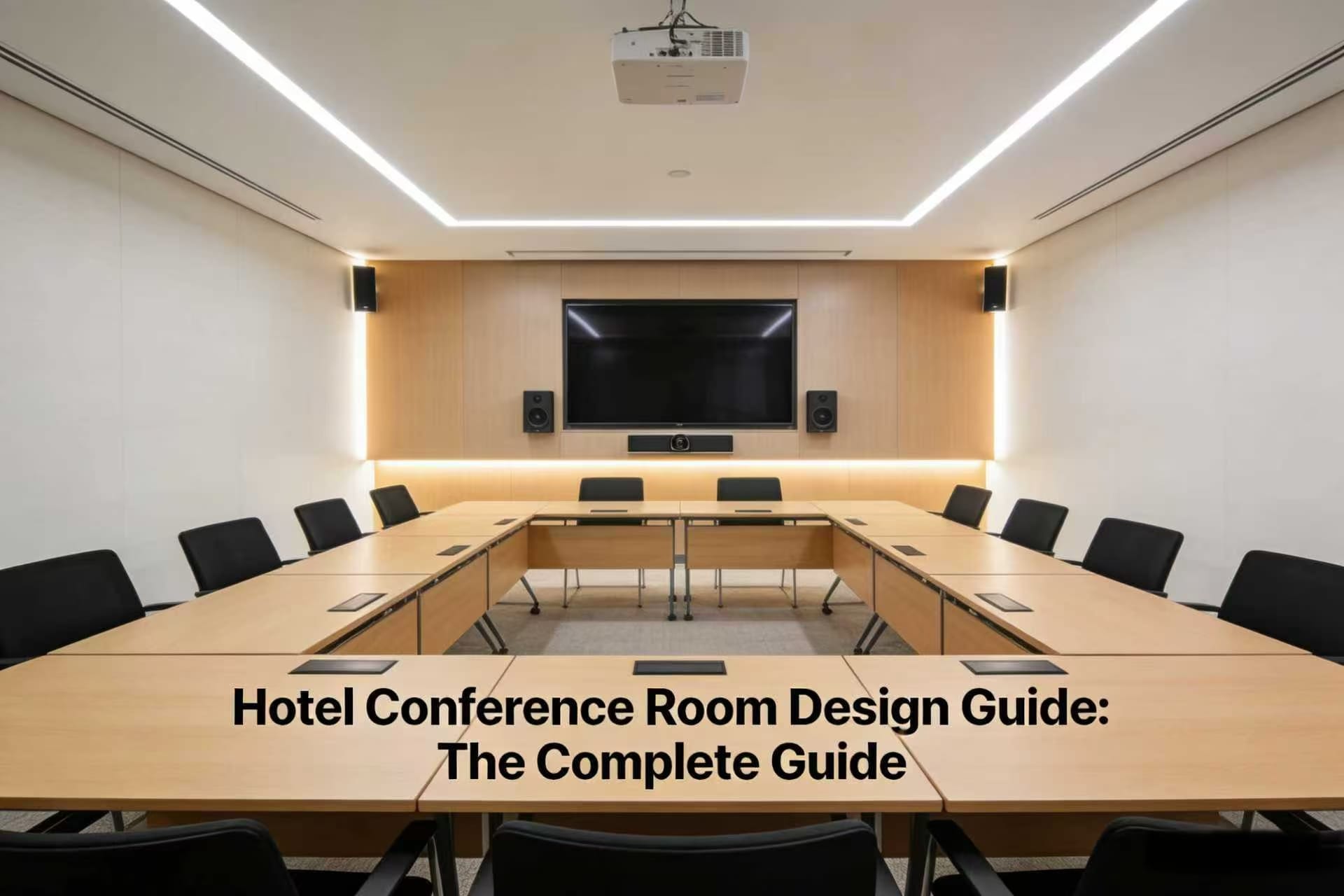
Walk into a great hotel conference room and you can feel it immediately. The space feels calm. The chairs are comfortable. The lighting is soft. The technology works without effort. Nothing distracts you, and everything helps you focus.
That’s what good conference room design should do.
It isn’t about luxury for the sake of luxury. It’s about removing friction. It’s about making meetings feel easy — even when they’re long, international, and high stakes.
If you manage a hotel, work in procurement, or handle interior design, this guide shares what actually works in real-world projects.
Why Conference Room Design Changed So Much in Recent Years
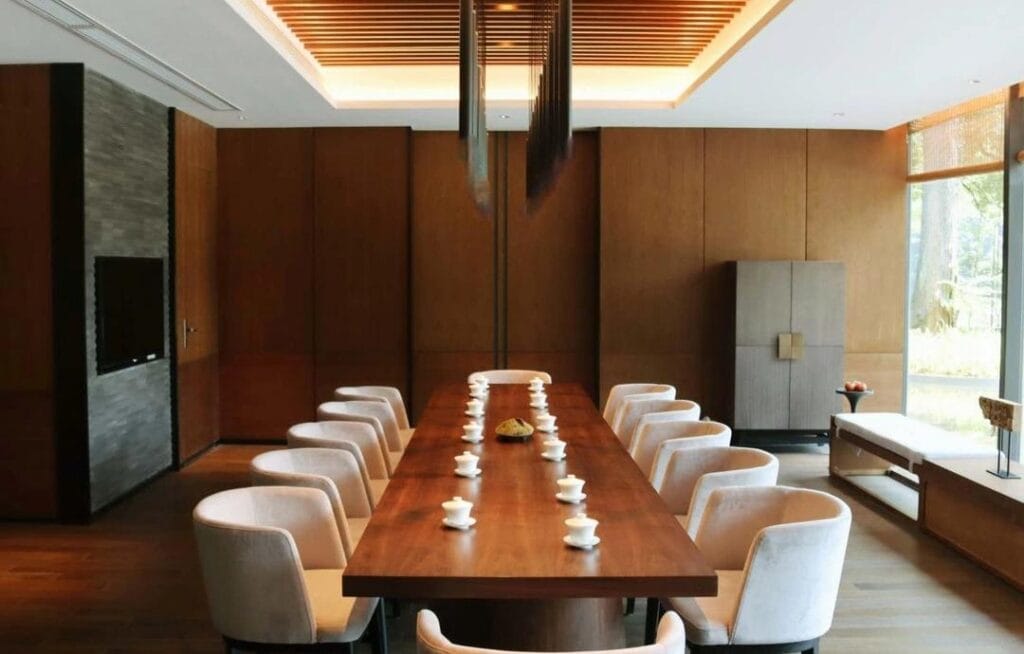
A few years ago, most hotel meeting rooms were simple. Long table. Fixed chairs. One screen. Some cables. That was enough.
Today, that setup doesn’t work anymore.
Hotels now host:
- Hybrid meetings
- Remote teams
- Training workshops
- Investor presentations
- Cross-border calls
Modern conference room design has to handle all of this. If a room can’t adapt, it becomes a weak point in your guest experience instead of a strength.
Flexibility Comes First (And It Always Pays Off)
The most common mistake in conference room design is choosing furniture that locks you into one layout.
Fixed tables look clean, but they limit you.
Real hotels need rooms that can turn from:
- A formal boardroom in the morning
- A classroom-style training space at noon
- A collaborative workshop room in the afternoon
Modular tables, lightweight chairs, and movable walls make this possible. Staff can reconfigure the room in minutes, not hours. Over time, this flexibility saves money and increases booking opportunities.
Technology Should Feel Invisible — Not Intimidating
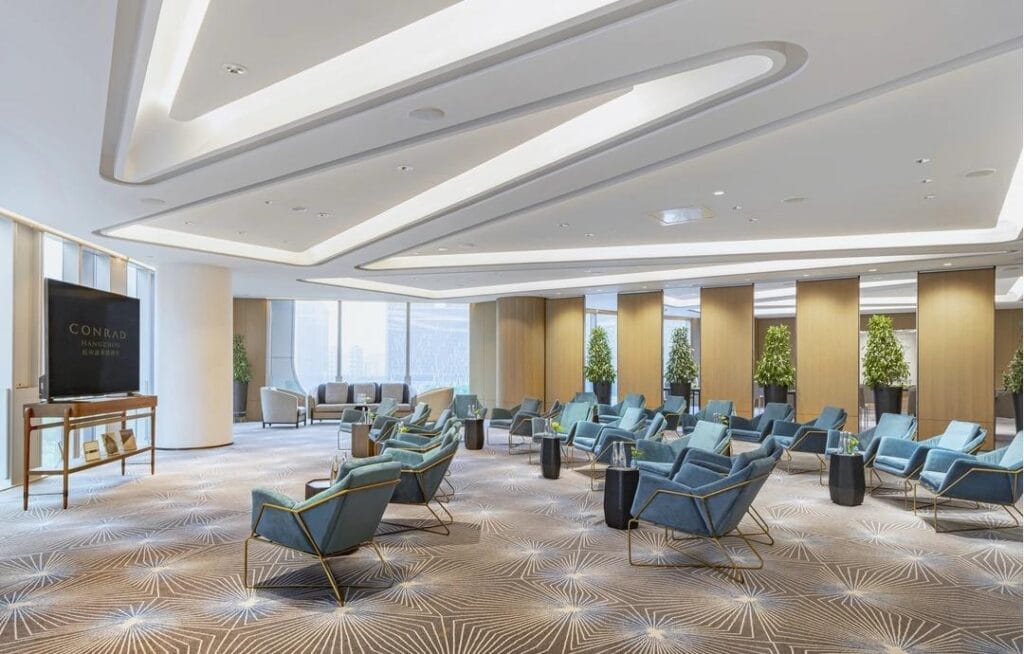
The best conference room design doesn’t show off technology. It hides it.
People shouldn’t see cable messes or walk around looking for sockets.
Built-in power is no longer a luxury. It’s basic infrastructure:
- Power outlets inside the tables
- USB and Type-C charging ports
- Wireless charging pads
- Cable trays under the table surfaces
For hybrid use, practical features matter more than fancy features:
- Clear cameras that capture the whole room
- Ceiling microphones that don’t pick up table noise
- Stable WiFi that doesn’t drop mid-call
When technology is integrated properly, guests barely think about it. And that’s the goal.
Most Hotels Underestimate Acoustics and Lighting
Here’s a truth many designers learn too late: bad sound ruins good design.
You can have beautiful furniture and a luxury finish, but if voices echo and outside noise leaks in, the experience fails.
Smart conference room design always includes
- Acoustic wall panels
- Soft flooring to reduce sound reflection
- Insulated doors and partitions
Lighting is just as important
Harsh white lighting makes long meetings feel longer. The better solution:
- Soft ambient lighting
- Adjustable brightness
- Warm task lighting
- Natural daylight when possible
These are not decorative decisions. They are functional decisions.
Style Matters, But Comfort Matters More
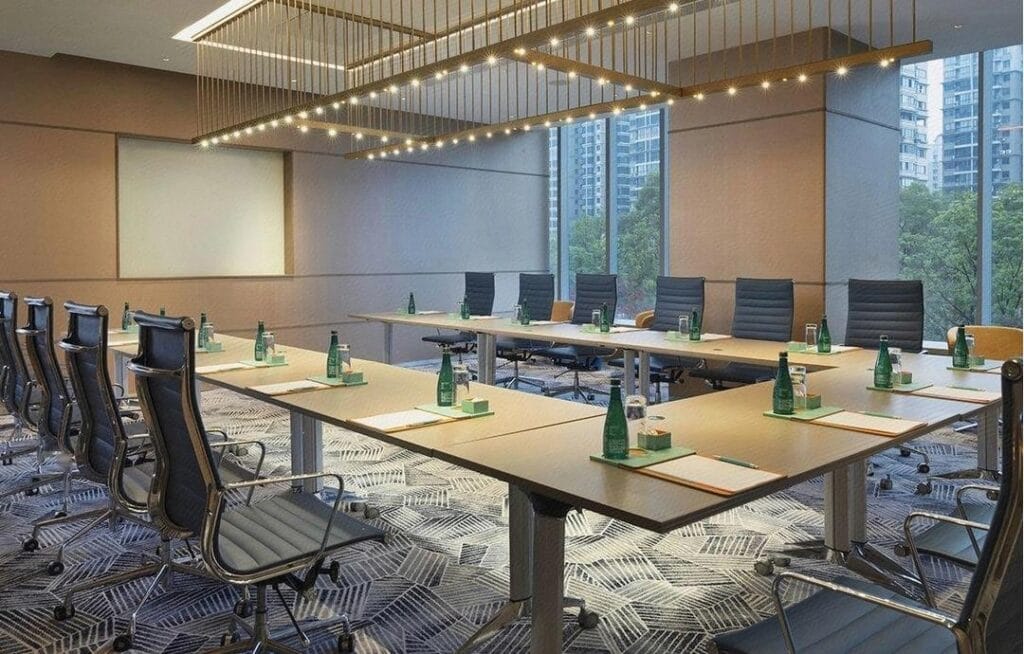
There’s a trend in hotels right now toward “quiet luxury” — clean lines, calm colors, and natural textures.
Good conference room uses:
- Wood finishes
- Soft fabrics
- Neutral color palettes
- Comfortable, breathable materials
But here’s the key point: guests remember comfort more than color.
Ergonomic chairs, stable tables, good air circulation, and enough personal space matter far more than a fashionable wall finish.
Sustainability Is No Longer Optional
Eco-friendly conference room design is no longer a marketing bonus. It’s expected.
Hotels are moving toward:
- Low-VOC paints
- FSC-certified wood
- Recycled fabrics
- Energy-efficient lighting
- Motion sensors
Modular furniture also supports sustainability by extending the life cycle of the room. Instead of throwing things away, spaces are simply adapted.
Traditional vs. Modern Conference Room
| Feature | Traditional Setup | Modern Conference Room |
| Furniture | Heavy, fixed | Modular, movable |
| Layout | One fixed format | Multiple flexible layouts |
| Power Access | Wall outlets | Integrated table power |
| Technology | Added after | Built into the design |
| Acoustics | Minimal | Treated and optimized |
| Lighting | Static | Adjustable and layered |
| Guest Comfort | Basic | Long-session comfort |
Why Hotels Choose PMOU in Real Projects
When hotels work on conference room design, they often underestimate the complexity. Furniture, wiring, layouts, shipping, and installation rarely line up perfectly.
That’s why many properties work with suppliers like PMOU.
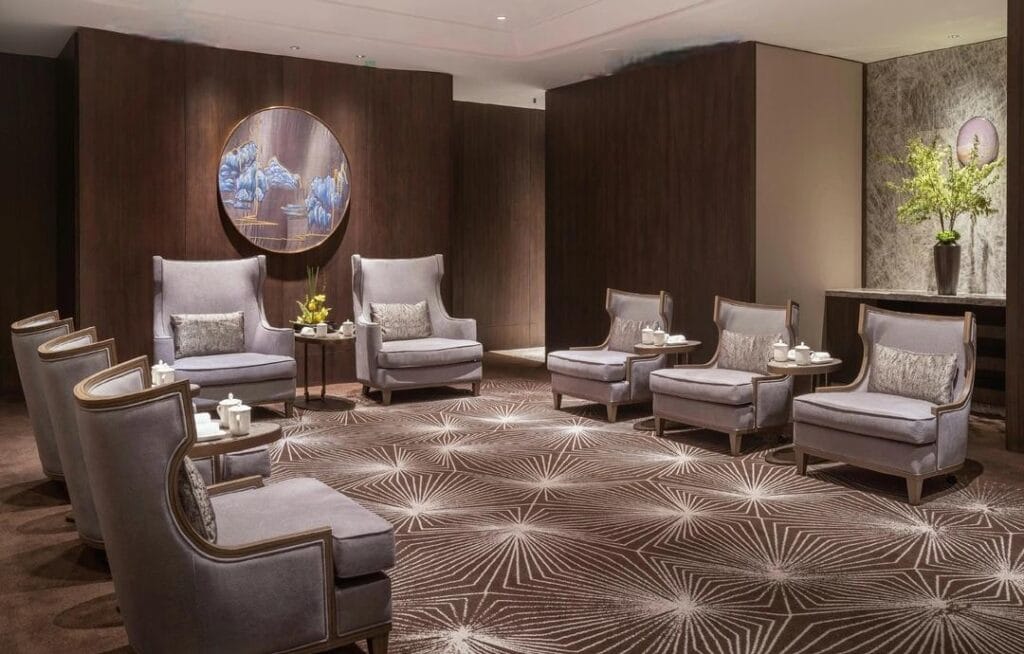
PMOU supports hotels by providing
- Custom modular conference furniture
- Built-in power and data solutions
- Hybrid-meeting-ready layouts
- Global logistics and export handling
- Sustainable material options
- On-site installation support
The advantage is simple: fewer headaches, fewer gaps, and a smoother process from design to opening.
Simple, Practical Rules That Actually Work
If you want a conference room that performs well in real life, follow these basics:
- Design for flexibility, not perfection
- Plan power and data before decoration
- Choose comfort over trends
- Invest in acoustics early
- Use lighting to support focus, not impress
- Work with suppliers who understand hotels, not just furniture
Good conference room design is practical. It doesn’t scream for attention. It just works.
FAQ
Q: Can modular furniture really save time?
A: Yes. Modular systems are easier to ship, faster to install, and simple to reconfigure.
Q: How does conference room design support hybrid meetings?
A: Built-in tech, strong acoustics, and flexible layouts make transitions between in-person and remote seamless.
Q: Is sustainable furniture worth the investment?
A: Yes. Guests value eco-friendly design, and it reduces long-term operating costs.
Q: How do hotels keep design consistent across locations?
A: Working with a global supplier like PMOU ensures the same materials and standards worldwide.
Q: What if our needs change later?
A: With modular conference room, you can rearrange the space without rebuilding.
Final Thoughts
At the end of the day, conference room design isn’t about style magazines. It’s about usability.
When guests sit down and everything feels natural — the chair, the lighting, the sound, the technology — that’s when you know the room is truly successful.
With the right planning and the right partner, your hotel conference room can become a reliable business asset, not just another space.
PMOU helps hotels make that happen, quietly and professionally.