Import hotel furniture from China still pencils out in 2026 — if you know where the real costs are hiding.
I’ve spent 20 years in furniture import-export. I’ve worked the floor of factories in Foshan, untangled customs holds at LAX, and renegotiated BOMs the night before a production lock. Every tariff cycle, the same panic circulates. Every cycle, the buyers who understand the mechanics come out ahead.
Here’s what to actually do when you need to import hotel furniture from China this year.
What the Tariff Landscape Looks Like Right Now
Don’t trust a single headline on this — the picture has layers.
The stacking problem is real. Chinese-origin hotel furniture in 2026 can face multiple simultaneous duty layers: legacy Section 301 tariffs, a Section 232 levy of 25% now applied to upholstered wooden furniture and cabinetry (Source: U.S. Federal Register, Section 232 Furniture Investigation, 2025), plus any baseline global tariff in effect. These stack. Your customs broker needs to model total landed duty, not headline rate.
China’s U.S. market share has shifted — but not disappeared. As of 2024, Vietnam holds approximately 28.6% of U.S. furniture imports while China holds 22.8% — a reversal from five years ago, driven almost entirely by tariff arbitrage, not quality or capacity. Chinese factories didn’t get worse. The code did.
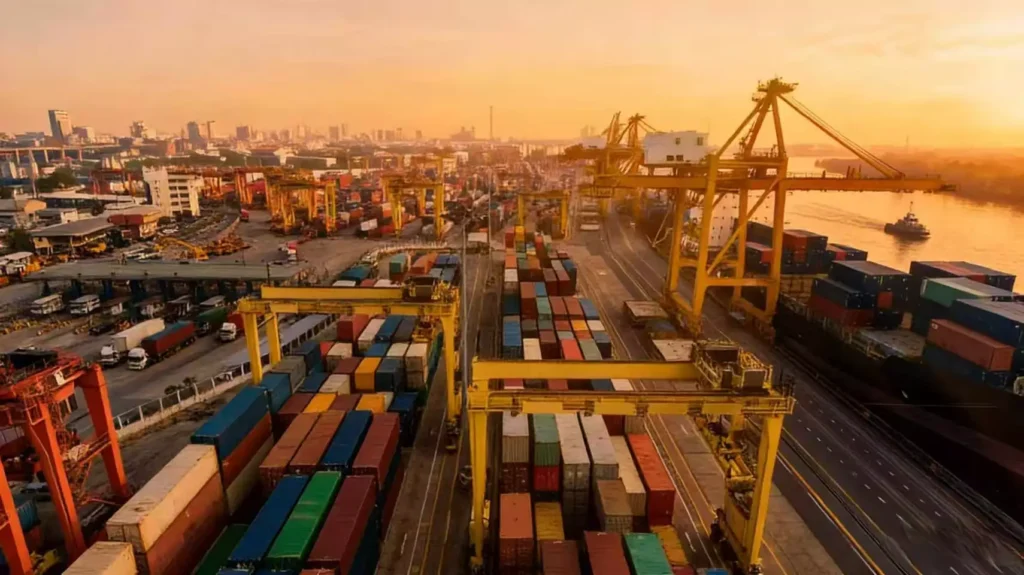
Front-loading confirmed the demand is there. In May 2025, weekly furniture booking volumes to the U.S. peaked above 72,000 TEUs — more than double typical levels — as importers raced to move Chinese inventory ahead of new tariff action. That’s not a dying trade route. That’s a market under pressure, still moving.
5 Strategies That Actually Work in 2026
1. HTC Code Optimization Before Production Starts
Most buyers bring in their customs broker after the goods ship. That’s the wrong sequence.
The Harmonized Tariff Code assigned to your product determines which duty layers apply. A solid-wood casegood, an MDF-core casegood with veneer, and a metal-frame unit with upholstered panels each classify differently — and carry different effective rates. Restructuring material specs before production locks can reduce total duty exposure by 15–30% on certain FF&E categories. This is legal, standard practice, and almost always worth the conversation.
2. Value Engineering, Not Spec Cuts
Switching to a cheaper factory under cost pressure is not value engineering. It’s a guest satisfaction problem deferred.
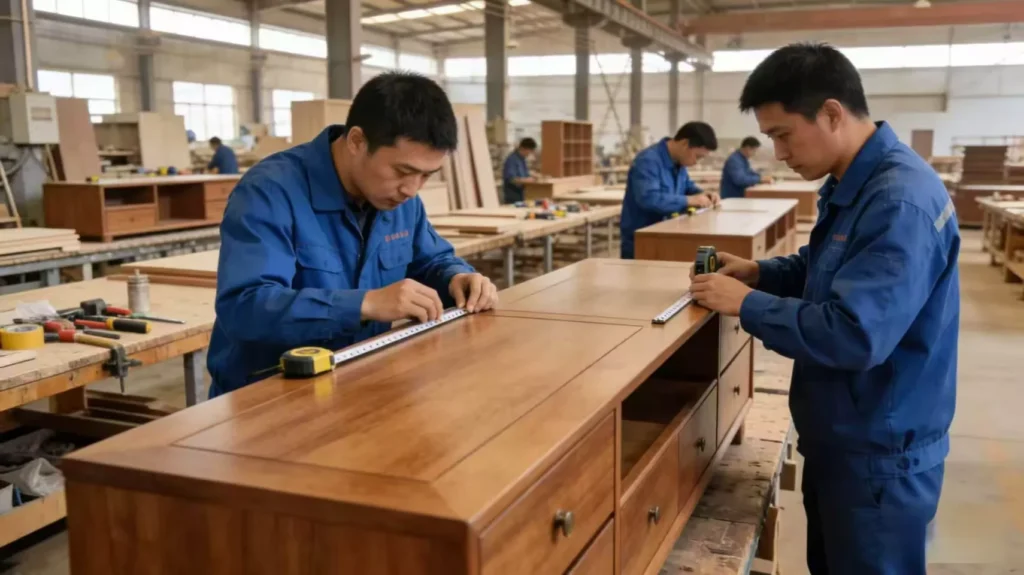
Real value engineering means adjusting joinery methods, substituting core materials within visual-equivalent ranges, or modifying upholstery construction in ways that are invisible to the guest and compliant with brand standards. Done correctly: 10–20% cost reduction, zero visible compromise.
3. Hybrid Sourcing by Category
Not all FF&E categories carry equal tariff risk. Route them accordingly:
| Category | Recommended Origin | Reason |
| Upholstered casegoods | Evaluate Vietnam or India | Heaviest Section 232 + 301 stacking |
| Metal fixtures & hardware | China | Minimal tariff impact, strong cost advantage |
| Custom millwork | China | Labor and craft advantage holds |
| Soft seating | Case-by-case | Depends on fabric origin and frame spec |
4. DDP Pricing — No Surprises Post-Ship
Always request Delivered Duty Paid (DDP) pricing that rolls tariffs, freight, and customs clearance into a single number. Any quote that hands you a FOB price and lets you figure out the rest is a quote that will surprise you at the port.
5. Container Optimization
Full container load discipline — combining multiple FF&E categories into coordinated single shipments — saves $8,000–$15,000 per container compared to piecemeal procurement. On a 150-key project, that delta funds a full FF&E category.
Cost Benchmarks: 2026 Estimates
| FF&E Category | China (tariff-adjusted) | Vietnam | U.S. Domestic |
| Casegoods (per key) | $800–$1,400 | $1,100–$1,800 | $2,200–$4,000 |
| Soft seating | $300–$600 | $400–$700 | $900–$1,600 |
| Custom millwork | $200–$500 | $280–$580 | $700–$1,400 |
| Lead time | 90–120 days | 100–130 days | 60–90 days |
Figures based on active 2026 project quotes. Vary by brand standard and spec.
Who This Still Works For
- International hotel developers (Middle East, Southeast Asia, Europe) — zero U.S. tariff exposure, full cost advantage intact
- U.S. projects at 100+ keys — tariff-adjusted China pricing still undercuts alternatives at volume
- Renovation projects with spec flexibility — value engineering absorbs the tariff delta

What to Ask Any China FF&E Supplier Before You Sign
- Can you structure BOMs for HTC code optimization before production begins?
- Do you offer DDP pricing that includes all current duty layers?
- Can you manage a hybrid order across Chinese and third-country factories?
- Do you work with U.S.-based customs brokers on a regular basis?
- How do you monitor tariff windows and adjust production scheduling?
If the answer to any of these is vague, that supplier is running a 2019 operation in a 2026 market. At PMOU, these aren’t add-ons — they’re standard practice on every project.
FAQ – About Import Hotel Furniture from China
Q: Is import hotel furniture from China still cost-effective with 2026 tariffs?
A: Yes for most mid-to-upscale hotels with 100+ rooms, especially custom millwork and metal fixtures. Total cost varies by category and needs tariff-adjusted landed cost calculation.
Q: What’s the difference between Section 301 and Section 232 tariffs on hotel furniture?
A: Section 301 (2018) covers most Chinese furniture over trade practices. Section 232 targets upholstered wooden furniture, cabinets and vanities for national security. Both often apply together, raising total duties.
Why PMOU
PMOU is a professional one-stop hotel FF&E manufacturer in China. It helps clients import hotel furniture from China with direct factory control and has assisted global clients in controlling FF&E costs through tariff cycles since 2018. It provides procurement solutions, not just furniture.