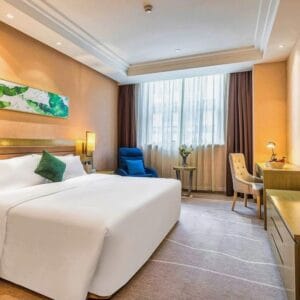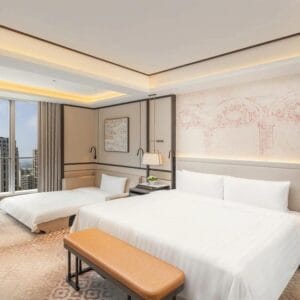
In the hotel world, space equals brand. The lobby often shapes a guest’s first view of the hotel. As hotel functions grow more varied, old fixed furniture can’t meet flexible needs.
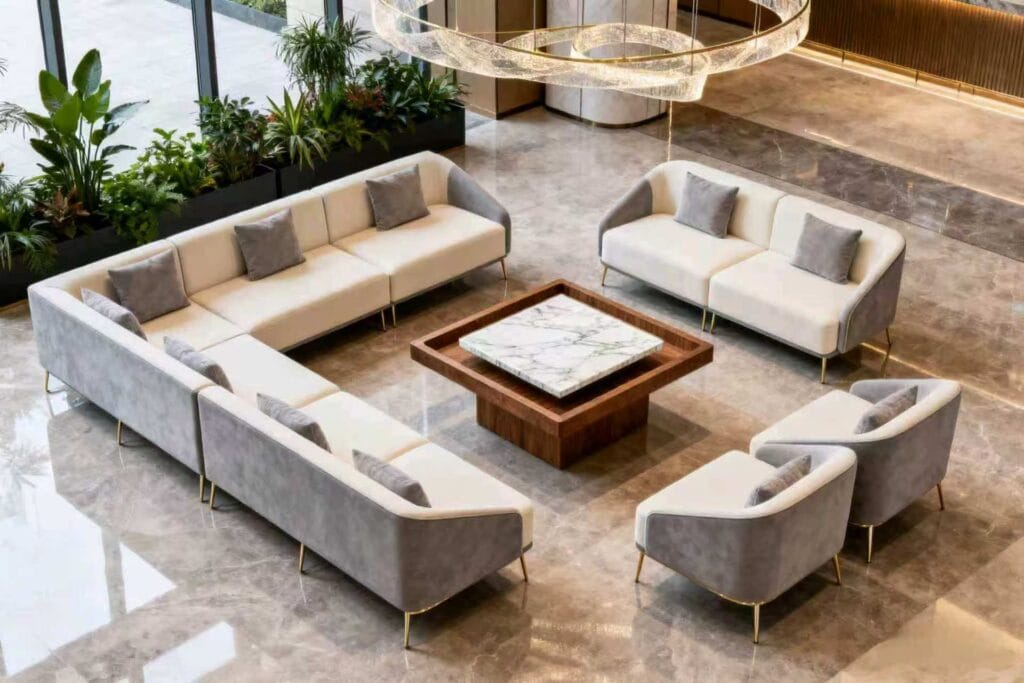
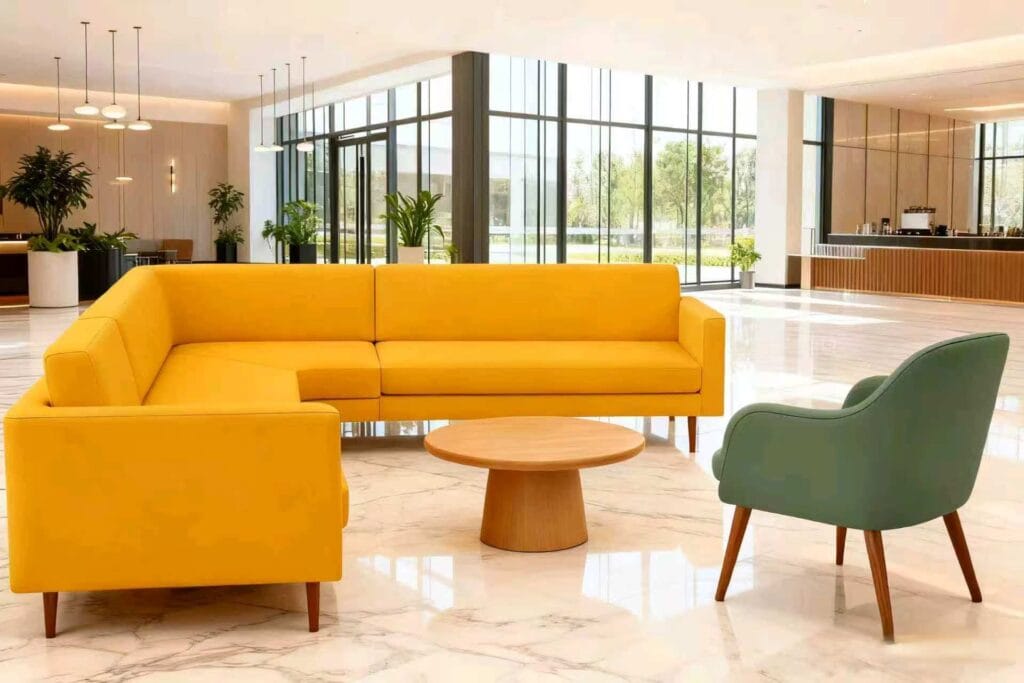
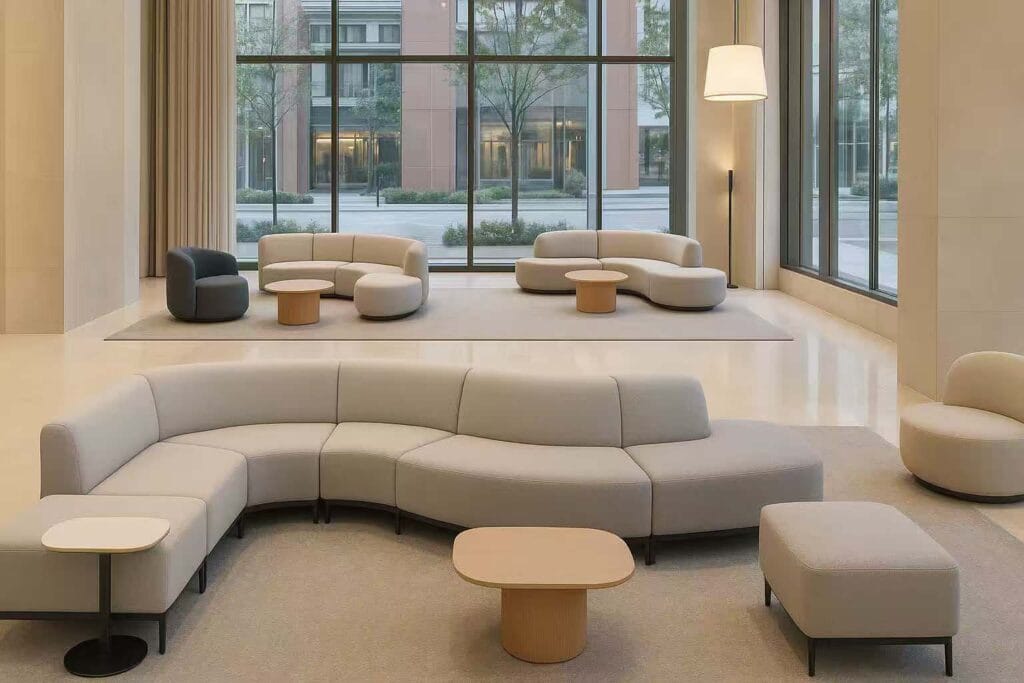
In this setting, modular hotel lobby furniture design rises up. It uses simple, separate parts, easy connections, and layouts that you can rearrange. This lets hotel lobbies have an experience where you can mix, match, and change things anytime.
PMOU can use modular design strategies to create lobbies that feel both flexible and high-end.
Trend Insights: Why Modular Hotel Lobby Furniture Design Leads the Future
From rigid layouts to flexible combinations
Traditional hotel lobbies use fixed furniture. Once placed, layouts are hard to change. This makes holiday setups, events, or operation changes difficult.
Modular hotel lobby furniture design breaks this limit. Modern hotels like open and flexible layouts. More hotels use reconfigurable furniture to fit meetings, events, social scenes, and more.
Hotel operators now care more about the “lobby dwell rate”: the longer guests stay in the lobby, the more they may spend. Hotel Management notes:
“Modular seating arrangements offer versatility … rearranged to create different seating configurations.”
This shows modular layouts not only look better, but also boost interaction and user experience.
Sustainability and lifecycle management
In a time when sustainability matters, modular furniture stands out. You can take apart, replace, or recycle its parts. Hotels can replace only broken parts instead of throwing away whole pieces. This extends furniture life and cuts material waste.
Many hotel furniture trend reports list “sustainability + modular” as a top direction for 2025.
Smart components and tech integration
Guests in lobbies need to charge devices, work, or find information. Modular furniture can include wireless chargers, USB ports, LED strips, and hidden cable channels. This makes furniture a carrier for modern needs.
Brand identity and visual difference
Modular design? Different hotel projects can all use the same basic parts. Easy peasy. But they can change things like finishes, color blocks, or panel modules to make each one different.
This keeps consistency but adds distinct looks. For hotel chains, this is a lower-cost way to build brand identity.
Key Advantages of Modular Hotel Lobby Furniture Design
Below we list the real value modular lobby furniture brings to hotels.
Advantage 1: Better guest experience and brand perception
The lobby is the hotel’s show place. Modular layouts help to:
- Arrange seats and displays along traffic and sight lines to avoid crowding.
- Create focal groups that guide the eye and add visual layers.
- Swap decorative modules by theme or season to keep things fresh.
- Show brand style through module combinations.
- When guests find the lobby easy to use and comfortable, they tend to trust the hotel’s quality more.
Advantage 2: Changeable layouts and strong flexibility
The core of modular furniture is free combination and reconfiguration. Benefits include:
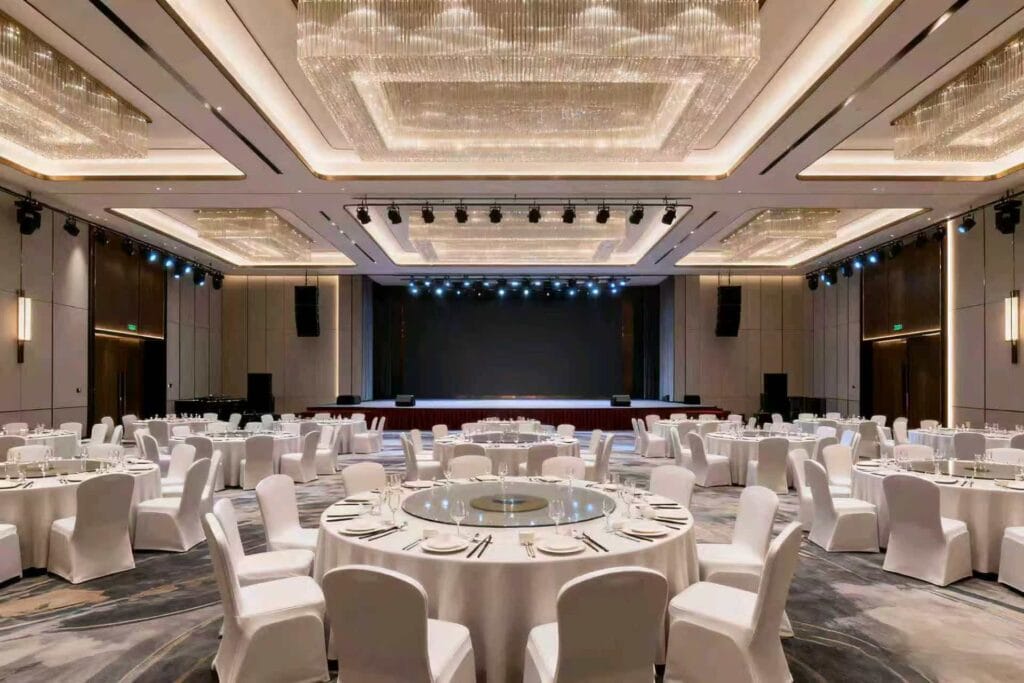
Quickly changing layout for events, meetings, or holidays.
When the hotel is renovated, just reassemble modules instead of major demolition.
Hotel chains can use the same basic modules and just switch out the local finish modules.
Modular furniture’s changeability is its main edge.
Advantage 3: Lower maintenance and replacement cost
Public area furniture faces heavy wear. With modular design:
- A broken module can be replaced alone, not the whole item.
- Spare parts are simpler to manage; modular spare parts are easier to stock.
- Taking parts off and putting new ones on doesn’t mess things up as much, and fixing stuff is quicker.
- Long-term operation costs are easier to control and ROI looks better.
Advantage 4: Better production, logistics, and installation
For a one-stop FF&E platform like PMOU, modular design also helps the supply chain:
- Modules are easy to standardize in production and quality control.
- Flat packing and standard transport save space and cost.
- On-site work is mostly module connection — no large-scale construction.
- Overall project time shortens and the process runs smoother.
How to Implement Modular Hotel Lobby Furniture Design in Practice
Step 1: Early research & positioning
- Define hotel positioning and target guests (business / leisure / convention, etc.).
- Study guest movement, stay needs, social / waiting / work uses.
- Measure lobby size, column grid, entrances, light, paths, and power layout.
- Talk with the project team about future events, renovations, and how often themes will change.
Step 2: Break down the module system
- Split lobby furniture into modules: Seat parts, back parts, side table parts, divider parts, light/charging parts, surface panels, and more.
- Design standard connectors (clips, rails, slots, fasteners) so modules can be taken apart, joined, and rejoined.
- Reserve space for cable channels, outlet interfaces, LED strips, and wireless charging.
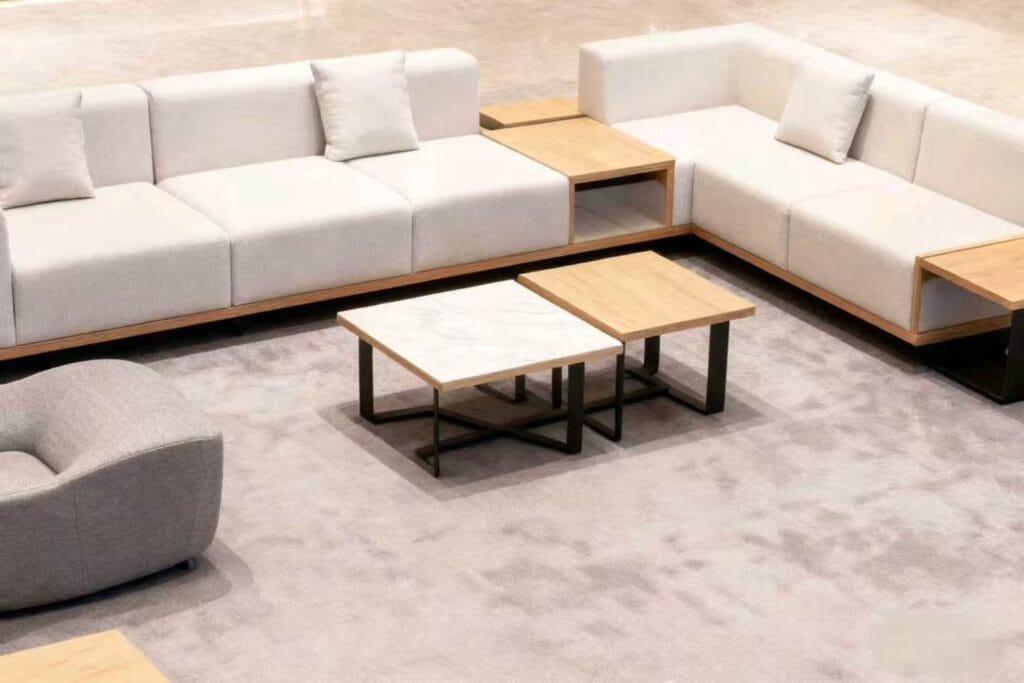
- Example: You can make a modular sofa with a base piece, back piece, side table piece, and decorative panel piece.
Step 3: Material standards & build methods
- Use removable covers or panel finishes for easy change and cleaning.
- Choose light but strong frame materials, like aluminum frames, honeycomb boards, or composite panels.
- Test connectors and clips for fatigue and durability to ensure many cycles of assembly.
- Materials must meet hotel public-area rules (fire safety, wear resistance, stain resistance, easy cleaning).
Step 4: 3D layout simulation & option comparison
- Use BIM / Revit / SketchUp / 3D tools to model module combinations.
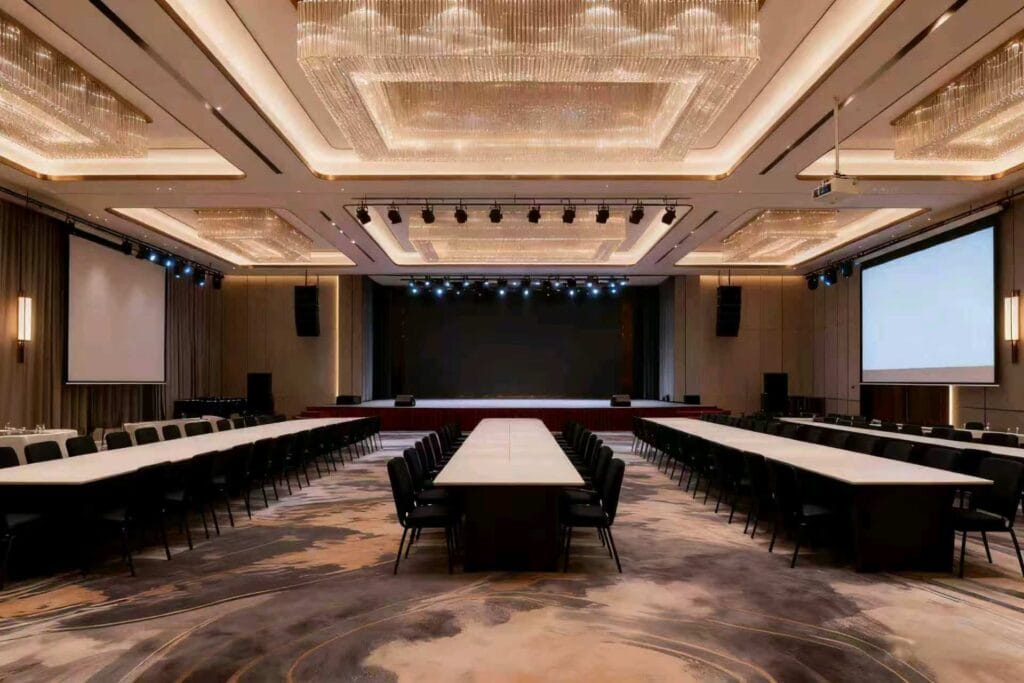
- Simulate different layouts (T-shape, U-shape, scattered, enclosed) and check sight lines, comfort, walkway width, and spacing ratios.
- Prepare several backup layouts for future scenarios.
Step 5: Sample testing & user validation
- Make key modules as samples and place them onsite, in a mock-up room, or the design studio.
- Invite designers, clients, ops team, hotel management, and some guests to try them and give feedback.
- Adjust interfaces, combination ways, visual matches, touch feel, and comfort.
- This step is key to confirm the design works.
Step 6: Mass production / packing / logistics
- Once the samples get the okay, we’ll start making the modular furniture using standard steps.
- Use flat or standard packing to ease transport and handling.
- Plan spare modules early; PMOU can set up a module-level spare parts warehouse.
Step 7: On-site install / testing / handover
- Install teams must know the module connection order, tools, and fasteners.
- Leave time for testing to make sure modules are stable, visuals match, and connectors are tight.
- On handover, give module IDs, assembly/disassembly guides, spare parts lists, and a maintenance manual to the hotel team.
Your Partner in Modular Hotel Lobby Furniture Design
PMOU has its own factory and a mature buying and supply network. We can offer custom FF&E and OS&E solutions for hotels worldwide. This platform focuses on hotel furniture, public areas, restaurants, and leisure spaces—all with modular design and making. We handle design, purchasing, production, and installation to secure delivery, quality, and consistency.
Conclusion
In an age of experience economy and design-driven hotels, modular hotel lobby furniture design is not optional. It gives hotels flexibility, cost benefits, brand identity, and sustainability.
Need more info on modular hotel lobby furniture design? Contact us anytime!

FAQ
Q1: What is modular hotel lobby furniture design?
A: It is a flexible design idea using standard modules. You can quickly join or take apart the modules to fit different layouts and needs.
Q2: What are the benefits of modular hotel lobby furniture design?
A:
High flexibility: change layout by need and guest flow.
Cost saving: standard production lowers making and transport cost.
Fast install: cuts construction time and speeds hotel opening.
Sustainability: easy to reuse and recycle, fits green trends.
Q3: How to choose suitable materials for modular hotel lobby furniture?
A: Consider:
Durability: use dense foam and commercial fabrics for long life.
Cleanability: surfaces should be smooth and easy to wipe.
Look: color and texture must match the hotel’s style.
Q4: What hotel types fit modular furniture?
A: Modular design works for many hotels, especially:
Business hotels: need flexible space for meetings and rest.
Resort hotels: offer many multi-use areas for different guests.
Boutique hotels: need unique looks and fast layout changes.
Q5: How does modular design boost hotel brand image?
A: It improves space use and, through unique layouts and looks, shows the hotel’s brand idea and culture. This helps guests feel brand connection.
Q6: How to work with designers on modular furniture?
A: Make sure to be clear on:
Function needs: main uses like reception, rest, socializing.
Space plan: guest flow and space use.
Brand look: match furniture to hotel style.
Budget control: pick modules with good value inside budget.