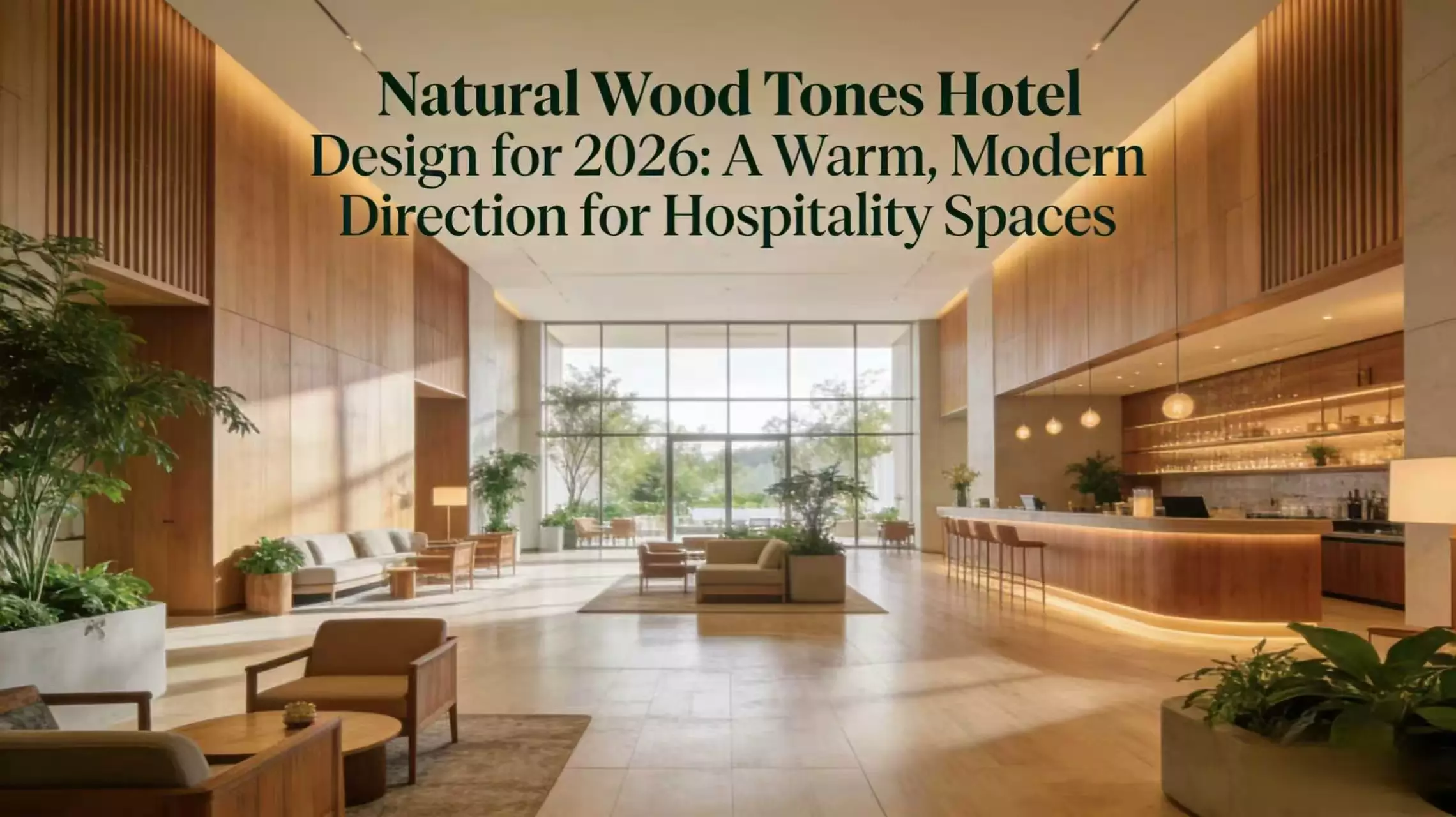
Natural wood tones hotel design helps solve a common hospitality problem: how to make a hotel feel warm, premium, and memorable without making the space feel heavy, dated, or visually disconnected.
For hotel owners, designers, and FF&E buyers, this approach creates a more comfortable guest experience while keeping materials, furniture, and finishes aligned across lobbies, guest rooms, suites, and dining areas.
In 2026, this matters more because hotel design is shifting toward spaces that feel easier to stay in, not just visually organized.
Why Natural Wood Tones Keep Gaining Traction
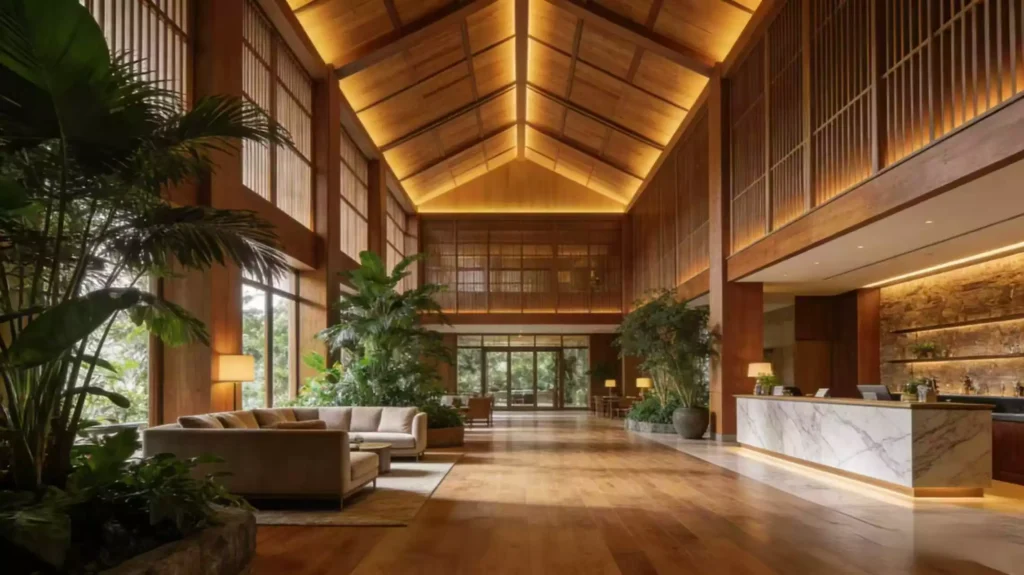
In many hotel renovations, the issue is not layout but atmosphere. A lobby can be well-planned but still feel like a pass-through space. When wood tones replace flat gray panels or high-gloss surfaces, the change shows up in how guests use the space. Seating areas become more occupied, transitions between zones feel less abrupt, and the environment supports longer stays instead of quick movement.
In projects that introduce natural materials, guest behavior also shifts. Spaces that include wood, greenery, and softer material transitions have been shown to increase guest dwell time in public areas by up to 36% [Data source: 2026 industry benchmark]. This is not about decoration; it is about how material choices affect how long people stay, sit, and interact inside the hotel.
Core Value: Consistency Across the Entire Property
One of the main challenges in hotel projects is keeping the visual language consistent from one area to another. When too many finishes are introduced, the result often feels fragmented. Natural wood tones simplify that process.
In practice, the same wood tone can be applied across:
- reception desks and lobby wall panels
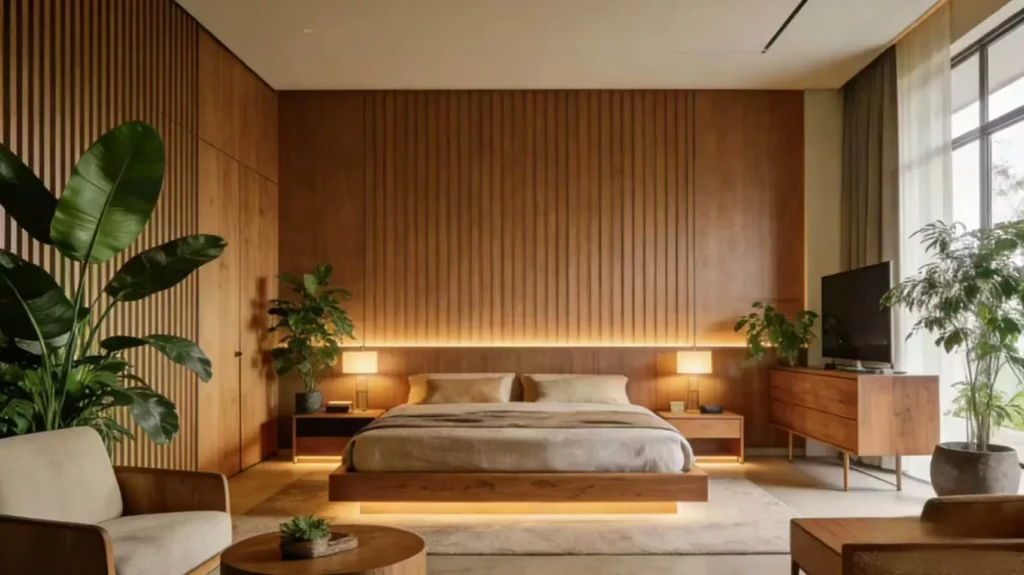
- guest room headboards and wardrobes
- bedside tables and writing desks
- restaurant millwork and service counters
This reduces the number of finish variations and makes it easier for procurement teams to control production and installation. In large-scale hotel projects, reducing finish complexity can lower coordination errors by around 20% [Data source: 2026 industry benchmark].
Core Features That Make the Style Work
Warm guest-first atmosphere
- Wood tones reduce the visual sharpness created by metal, glass, and polished stone.
- Guests tend to settle into seating areas more quickly when the surrounding materials feel less rigid.
- In guest rooms, warmer finishes help reduce visual fatigue, especially in compact layouts.
Better pairing with other hospitality materials
- Wood surfaces work directly with stone countertops, fabric panels, and matte metal fixtures without creating contrast conflicts.
- Designers can layer materials instead of separating them, which leads to smoother transitions between functional zones.
- Projects using coordinated material palettes report fewer redesign adjustments during execution, often reducing rework by 15% [Data source: 2026 industry benchmark].
Stronger brand identity through materials
- A consistent wood tone across different areas makes the hotel easier to recognize visually.
- Instead of relying on decorative elements, the material itself becomes part of the brand language.
- Guests are more likely to recall spaces where materials feel consistent rather than mixed without structure.
Easier execution across multiple zones
- Using one core material direction allows furniture, wall finishes, and built-in elements to align more naturally.
- Procurement teams can standardize suppliers and specifications, reducing sourcing time.
- Projects using unified material systems often shorten FF&E decision cycles by 10–18% [Data source: 2026 industry benchmark].
2026 Hotel Design Direction: Warmer, More Natural, More Residential
Recent hotel projects show a shift away from highly polished, uniform interiors toward spaces that feel closer to residential environments. This includes the use of wood, stone, textured fabrics, indirect lighting, and softer transitions between areas.
Instead of separating lobby, lounge, and dining zones with strong visual breaks, newer designs use material continuity to connect them. Wood tones play a central role in this approach because they can move across different functions without creating visual disruption.
In guest rooms, the same direction is visible. Hard contrasts are being reduced, and surfaces are becoming more layered. This change supports longer stays and reduces the sense of visual pressure that can come from overly minimal or overly decorative designs.
Projects that integrate natural materials and softer spatial transitions report higher guest satisfaction scores, with some properties seeing improvements of 12–18% in post-stay experience ratings [Data source: 2026 industry benchmark].
Comparison: Natural Wood Tones vs. Conventional Hotel Finishes
| Design Factor | Natural Wood Tones Hotel Design | Conventional Neutral Hotel Finish |
| Guest behavior | Longer stay in public areas | Faster movement through spaces |
| Visual structure | Connected across zones | Often segmented |
| Material coordination | Easier to align finishes | Requires more contrast management |
| Renovation flexibility | Works across different hotel types | Often tied to one style direction |
| Execution efficiency | Fewer finish conflicts | Higher chance of mismatch issues |
The difference becomes clear during operation. Hotels using more natural material systems tend to see better space utilization, especially in lobbies and shared areas, where seating and circulation patterns become more balanced.
Where This Approach Works Best
Hotel lobbies
Wood tones help reduce the “transit space” feeling. Guests are more likely to sit, wait, or meet in the lobby instead of passing through immediately. This increases the functional value of the space.
Guest rooms
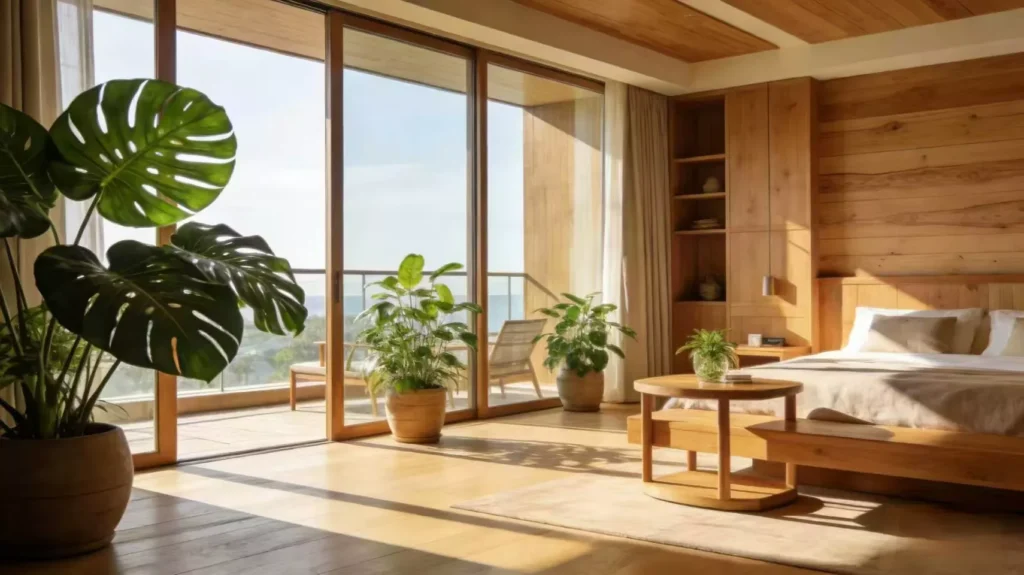
In guest rooms, wood elements such as headboards, desks, and wardrobes help organize the visual field. This makes the room easier to read and reduces unnecessary visual distractions.
Suites and premium rooms
Suites benefit from material layering. Wood, stone, and fabric can be combined without introducing excessive contrast, allowing the space to feel structured without relying on decorative elements.
Restaurants and breakfast areas
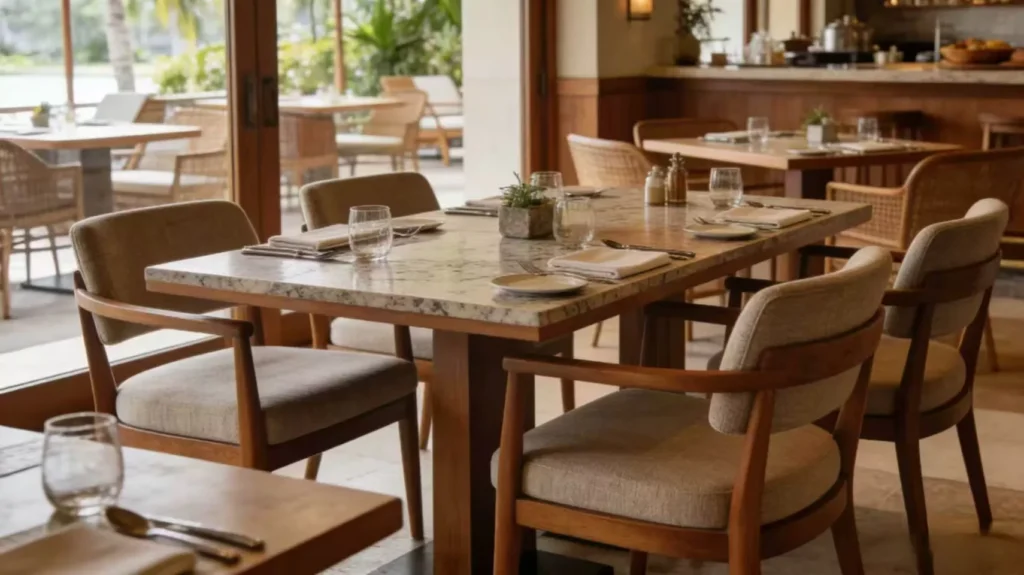
Dining areas often struggle with balancing activity and comfort. Wood tones help stabilize the environment, making it easier for guests to stay longer without the space feeling either too formal or too casual.
Boutique and lifestyle hotels
These properties rely heavily on atmosphere. Using consistent natural materials allows them to create a recognizable identity without adding excessive design features.
How PMOU Supports This Direction
For projects that require consistent material execution across multiple areas, PMOU helps translate design concepts into coordinated furniture, millwork, and finish systems. This reduces the risk of mismatched materials between suppliers and ensures that the final result reflects the intended design direction.
In projects where multiple vendors are involved, material inconsistency is one of the most common issues. A centralized FF&E approach helps control that risk and keeps the design aligned from concept to installation.
FAQ
Q: Who is natural wood tones hotel design for?
A: Natural wood tones hotel design fits hotel owners, designers, and procurement teams working on projects that need a warmer and more consistent material direction.
Q: What hotel types benefit most from this approach?
A: It works across boutique hotels, business hotels, resorts, and renovation projects where the goal is to improve atmosphere without changing the entire layout.
Q: Does this style still feel current in 2026?
A: Yes. Current hotel design directions show a clear move toward natural materials, softer transitions, and more residential-style environments.
Q: Can natural wood tones work in smaller guest rooms?
A: Yes. When materials are controlled and layered correctly, wood tones can reduce visual noise instead of making the room feel crowded.
Q: Is this approach limited to high-end hotels?
A: No. The same material strategy can be applied at different budget levels depending on the selection of finishes and construction methods.