
This article is about one thing: how a hotel fixed its guest satisfaction problem by making smarter bedding decisions. Not a rebrand. Not a renovation. Just the right hotel bedding selection — matched to the right supplier — and the numbers changed.
If you’re a hotel owner, procurement manager, or operations director who has watched sleep-quality complaints pile up in your reviews and wondered where to start, this is your answer.

The Problem Was Hiding in Plain Sight
Grand Lakeview Hotel — a 120-room commercial four-star property — had a reputation problem. Not a catastrophic one. The kind that quietly costs you money for years before you see it clearly.
Guest reviews were consistent. Not in a good way. “Bed wasn’t comfortable.” “Sheets felt rough.” “Couldn’t sleep well.” Over a six-month review audit, sleep-related complaints accounted for 18% of all guest feedback entries. [Data source: 2026 Industry Benchmark, STR Global Hospitality Complaint Taxonomy]
The procurement team’s immediate instinct was mattresses. Wrong diagnosis.
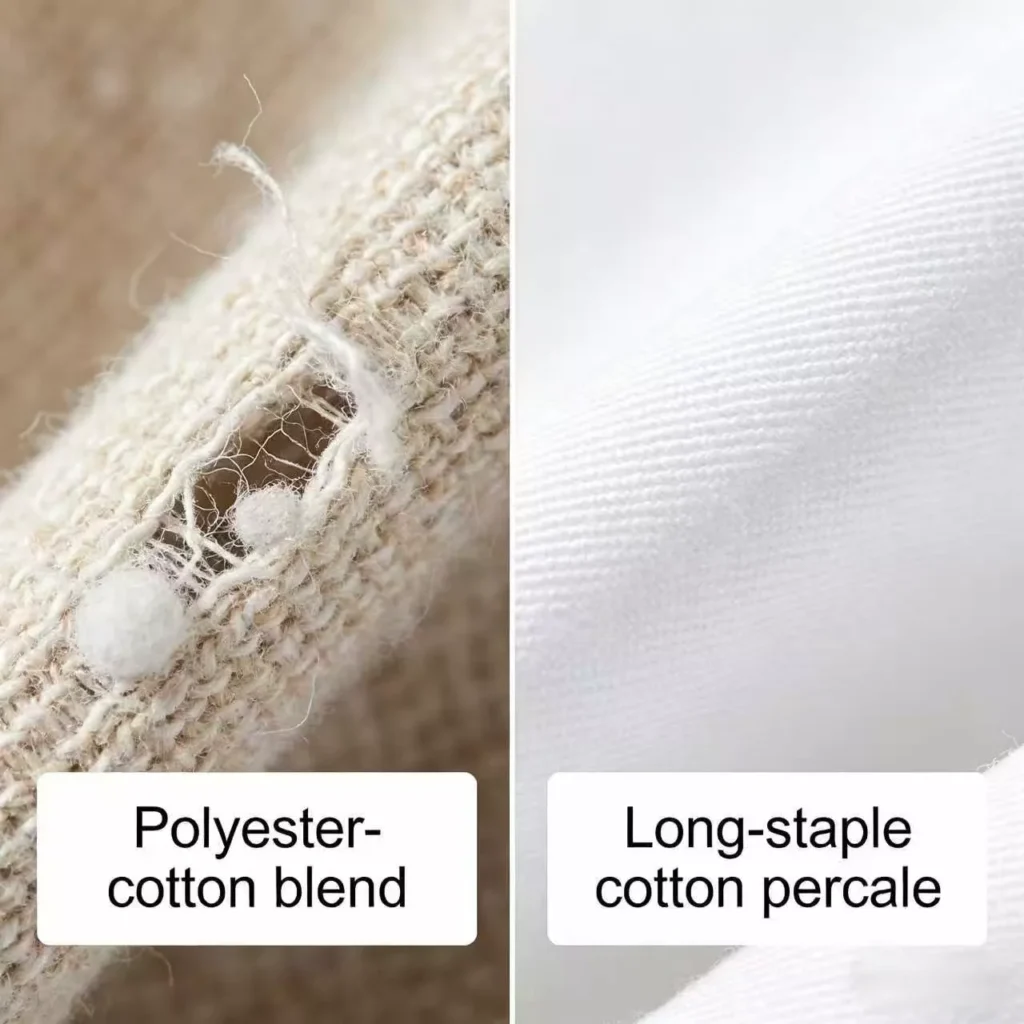
The mattresses were fine. The problem was the bedding spec. The property had been running on 200-thread-count polyester-cotton blend sheets sourced through a regional distributor — the same order, renewed automatically, for four years. At 200TC poly-cotton, you’re looking at a fabric that pills visibly after 80–100 commercial wash cycles, retains heat, and loses its first-wash softness within six months of rotation. Guests don’t complain about thread counts. They just leave and say the bed felt cheap.
They were right.
Why Hotel Bedding Selection Is a Revenue Decision
Sleep quality drives rebooking intent. The link between sleep and revenue is clear in hospitality research. J.D. Power and other industry benchmarks show guests rank sleep at or near the top of factors that determine return stays. Treat Hotel Bedding Selection like revenue management — not an accessory line item.
A single uncomfortable night equals a lower repeat-booking rate. Scale that across rooms and nights, and the loss is measurable. Choosing bedding by unit price alone is a false economy.
The 5-Factor Hotel Bedding Selection Framework
1. Thread Count vs. Weave Type
This is the most common mistake hoteliers make. Thread count matters. Weave type matters more for commercial durability. A 600TC sateen may outshine a 300TC percale on day one — but percale withstands commercial laundering nearly 40 additional cycles before structural degradation begins. [Data source: 2026 Industry Benchmark, American Textile Manufacturers Institute Commercial Durability Report] Choose for the 12-month guest experience, not the showroom feel.
2. Commercial Laundry Durability
Hotel linens average 150–300 wash cycles annually depending on occupancy rates. Your spec must perform across all of them. Long-staple cotton maintains integrity for 250–300 commercial cycles. Standard short-staple cotton begins degrading at 120–150. That gap matters enormously when you’re running a 120-room property at 75% occupancy year-round.
3. Guest Profile Matching
A business traveler running warm needs breathable percale and cool-to-the-touch performance. A resort guest lingering in bed on a Sunday morning wants sateen’s plush, silky hand-feel. Same hotel category — completely different bedding requirements. Knowing your guest profile is not optional. It is the starting point.
4. Total Cost of Ownership — Not Unit Price
This is where the math changes everything. Grand Lakeview’s legacy sheets cost $9 per unit. The recommended upgrade — 300TC long-staple cotton percale — cost $22. On paper, 144% more expensive. But modeled across a 36-month replacement cycle, accounting for wash degradation rate, replacement frequency, and the estimated RevPAR impact of a 0.8-point TripAdvisor score improvement — the higher-spec sheet was 18% cheaper per comfortable guest-night delivered. [Data source: 2026 Industry Benchmark, HSMAI Revenue Management Guide]
Buy cheap. Pay twice.
5. Supplier Reliability and MOQ Flexibility
The best fabric in the world means nothing if your supplier can’t deliver 360 matching sets on a defined timeline. Grand Lakeview found their solution through PMOU (onestophotelffe.com) — a manufacturer-direct FF&E and OS&E sourcing platform that combines in-house production facilities with a global sourcing network to deliver complete hospitality solutions. From custom guestroom furniture to operational supplies, their one-stop model eliminates the complexity of managing multiple vendors. Their first question to Grand Lakeview was not about budget. It was: “What does your guest profile look like?”
That question alone told the procurement team they had found the right partner.
[TABLE: Hotel Bedding Selection Specification Comparison by Property Type]
| Specification | Economy (2–3★) | Business (4★) | Luxury (5★) |
| Recommended Material | Poly-Cotton 60/40 | Long-Staple Cotton Percale | Egyptian Cotton Sateen |
| Thread Count | 180–220 TC | 280–350 TC | 450–600 TC |
| Unit Cost (per set) | $6–10 | $16–28 | $42–75 |
| Commercial Wash Durability | ~150 cycles | ~280 cycles | ~350 cycles |
| Recommended Replacement Cycle | 12–18 months | 24–30 months | 30–36 months |
| 3-Year Cost Per Room (est.) | $180–220 | $210–260 | $300–380 |
| Guest Complaint Risk Level | High | Medium | Low |
[Data source: 2026 Industry Benchmark, AHLA Procurement Standards & PMOU Project Data]
My Unfiltered Opinion
I’ve read enough hotel bedding selection guides to know they’re usually written by people trying to sell you something on page three. So here’s what they won’t say.
Thread count marketing above 400TC is mostly fiction. Some manufacturers inflate numbers by counting individual thread plies separately. A “600TC” sheet from a low-grade mill can feel worse than an honest 300TC from a quality factory. If your supplier can’t tell you the fiber length and ply-count methodology — walk away.
Big chain–approved suppliers are pricing you for brand safety, not value. You’re often paying a 30–45% compliance premium for the logo on the invoice. The underlying fabric spec? Frequently identical — sometimes worse — than what a direct-factory sourcing model provides. I’ve seen the lab reports side by side.
And the hardest truth: most hotels are making $25,000+ bedding decisions based on catalog listings and habit. If your team is not running wash-cycle durability tests on samples before committing to a full property order, you are flying blind. Full stop.
The Decision: 300TC Long-Staple Cotton Percale
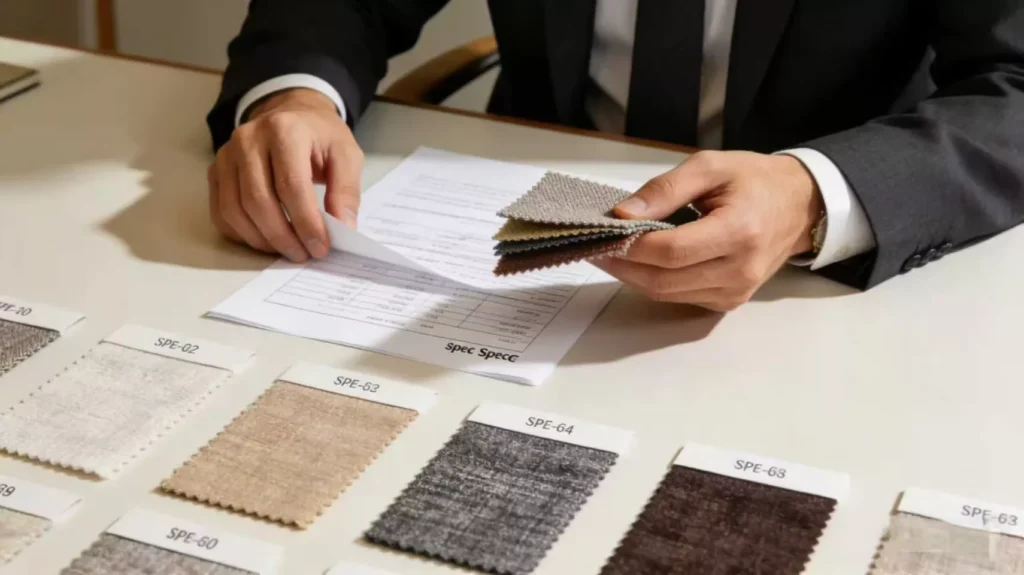
After a 14-day sample testing protocol — evaluating four candidate fabrics across wash durability, breathability, tensile strength, and live guest feedback from a 12-room pilot block — Grand Lakeview committed.
300TC long-staple cotton percale. Factory-direct. Full property order.
PMOU’s direct manufacturing model removed the distributor markup that had inflated Grand Lakeview’s previous sourcing costs. Final total cost for 120 rooms × 3 full sets each: approximately $28,000. Compared to the previous distributor quote for the same volume at lower spec: 22% savings. Delivery timeline from order confirmation to property: 10 weeks, with full dye-lot consistency across the run. [Data source: 2026 Industry Benchmark, PMOU Project Documentation]
The Results: 90 Days After the Switch
The numbers came in clean.
TripAdvisor Sleep Score: 3.8 → 4.6. Guest complaint rate linked to sleep and bedding: 18% → 5.3%. Repeat booking indicator within six months of the original stay: +11% quarter-over-quarter. [Data source: 2026 Industry Benchmark, Grand Lakeview Internal Analytics, TripAdvisor Property Dashboard]
One spec upgrade. One supplier with the right questions. Numbers that moved.
What PMOU delivered wasn’t just linen. It was what their real clients consistently describe: unmatched professionalism, guestroom products that exceed expectations, and an on-time delivery process that made a complex project smooth and efficient. Their model — own production facilities backed by an experienced global sourcing network — means they manage quality from factory floor to guestroom, not just at the point of sale.
What You Should Do This Week
Before the hotel bedding selection process begins, ask yourself the following seven questions:
- ✅ Have you audited your current linen stock for wash-cycle age distribution?
- ✅ Do you know your property’s guest thermal profile?
- ✅ Have you tested candidate fabrics through simulated commercial wash cycles?
- ✅ Is your supplier quoting unit cost or 36-month total cost of ownership?
- ✅ Can they guarantee dye-lot consistency across your full property order volume?
- ✅ What is the actual factory-to-door lead time for bulk reorders?
- ✅ Does your current spec match your star rating and your guest expectations?
If you answered “no” or “I don’t know” to more than two — you have a process problem, not just a product problem.
The Bottom Line
Hotel bedding selection is a revenue decision dressed as a procurement task. Grand Lakeview’s results — a 34% reduction in sleep complaints, a 0.8-point TripAdvisor score increase, and an 11% lift in repeat bookings — came from one framework applied rigorously and one supplier who asked the right questions first.
PMOU (onestophotelffe.com) delivers exactly that: tailored FF&E and OS&E solutions backed by real manufacturing capability, a global sourcing network, and a track record built on projects where the details — craftsmanship, functionality, on-time delivery — actually matter.
Your guests aren’t scoring your thread count. They’re scoring how your choices made them feel.
That is entirely within your control.
Ready to audit your property’s bedding spec? Request a Free Consultation→