Introduction: The Strategic Importance of Hotel Furniture Procurement
In the highly competitive hospitality industry, hotel furniture is far more than mere decoration; it is a critical asset that directly dictates guest satisfaction, average daily rates (ADR), and your property’s overall valuation. A meticulously planned hospitality furniture procurement strategy is the foundational bedrock of a profitable hotel project. As contemporary hotel design trends shift towards immersive, experiential spaces that blend residential comfort with commercial functionality, the complexity of sourcing the right FF&E (Furniture, Fixtures, and Equipment) has exponentially increased. Navigating this landscape requires a deep understanding of the importance of hotel furniture procurement, as every decision impacts the delicate balance between your initial capital expenditure (CapEx) and long-term operating expenses (OpEx). For hotel owners and procurement directors, mastering this hotel furniture investment is the ultimate key to minimizing risks, avoiding delayed grand openings, and ensuring a space that captivates guests while delivering sustained profitability.
The Anatomy of Pricing: A Complete Cost Breakdown
To effectively manage a hotel project budget, buyers must peel back the curtain on hotel furniture pricing and understand the intricate cost breakdown for hotel furniture. The final wholesale hotel furniture prices you receive are dictated by several core manufacturing elements. The most significant variable is the selection of hotel furniture materials. Choosing between solid hardwoods, high-density fiberboard (MDF/HDF), or metal alloys drastically alters the baseline cost. Furthermore, specialized surface treatments—such as scratch-resistant baking paint or high-pressure laminates (HPL)—add upfront costs but are essential for longevity. Upholstery choices, particularly high-resilience, fire-retardant foam, and commercial-grade fabrics, also heavily influence the final quote. Finally, precision engineering features like mortise-and-tenon joinery and heavy-duty, soft-close hardware contribute to the manufacturing overhead. By understanding these individual pricing factors, procurement teams can negotiate intelligently and apply value-engineering to optimize their budgets.
Understanding ROI: Why Commercial-Grade Durability Matters
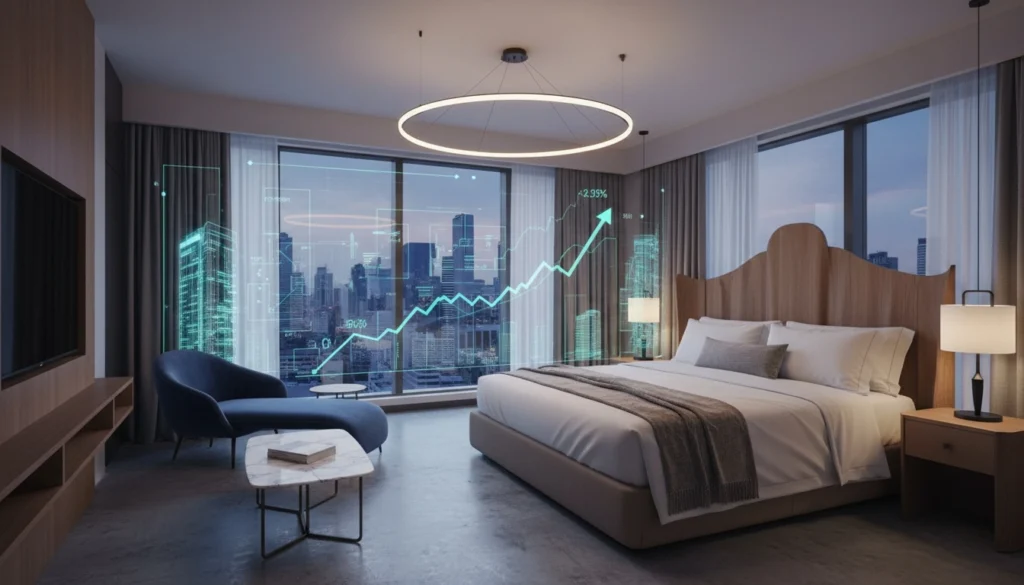
Evaluating the true hotel furniture ROI requires looking far beyond the initial invoice and analyzing the Total Cost of Ownership (TCO) over a five to eight-year lifecycle. Hospitality environments subject furniture to relentless, high-traffic abuse that standard residential pieces simply cannot survive. Investing in durable hotel furniture engineered with commercial-grade specifications—such as moisture-resistant finishes and high-rub-count fabrics—prevents the catastrophic hidden costs of early replacements and constant maintenance. This quality hotel furniture impact is especially evident when calculating the ROI of luxury suites. Premium, highly durable materials ensure that high-yield rooms remain in pristine, sellable condition year after year, allowing hoteliers to maintain premium room rates without revenue-draining out-of-order periods. Ultimately, prioritizing heavy-duty materials is a financial defense mechanism; it protects your operating margins by virtually eliminating the need for continuous, expensive repairs.
Factory-Direct vs. Purchasing Agents: Optimizing Your Budget
A major hurdle in maximizing your procurement budget is navigating the traditional supply chain, which is often bloated with middlemen. Utilizing hotel furniture purchasing agents has historically been the norm, but this convenience comes at a steep price, typically involving hidden markups or service fees ranging from 8% to 15%. For savvy hoteliers and procurement officers, transitioning to a factory direct hotel furniture sourcing model is a game-changing financial strategy. By dealing directly with the manufacturer, you completely eliminate these intermediary margins. This allows you to reallocate those substantial savings directly into upgrading material quality or accelerating your ROI. Furthermore, bypassing agents and directly selecting your hotel furniture supplier ensures transparent communication, streamlining the process from the factory floor to the hotel room, and significantly reducing the risk of miscommunications that often plague multi-tiered procurement networks.
The Role of Customization: Navigating OEM/ODM Production
In today’s hospitality landscape, brand differentiation is paramount, making custom hotel furniture procurement a vital component of any successful project. Bespoke hotel furniture solutions allow properties to perfectly reflect their unique brand narrative and adapt to specific architectural constraints. However, total customization can easily inflate budgets if not managed correctly. This is where partnering with an experienced OEM hotel furniture factory becomes invaluable. Elite manufacturers offer flexible hotel furniture design through a process known as value engineering. Their engineering teams collaborate with interior designers to modify internal structural components or substitute prohibitively expensive materials with high-quality, cost-effective alternatives—all without compromising the original visual aesthetics. This sophisticated OEM/ODM approach guarantees that even the most complex, customized designs can be transitioned into highly efficient, scalable mass production, keeping your project strictly within budget.
Mock-up Rooms: The Ultimate Risk Mitigation Strategy
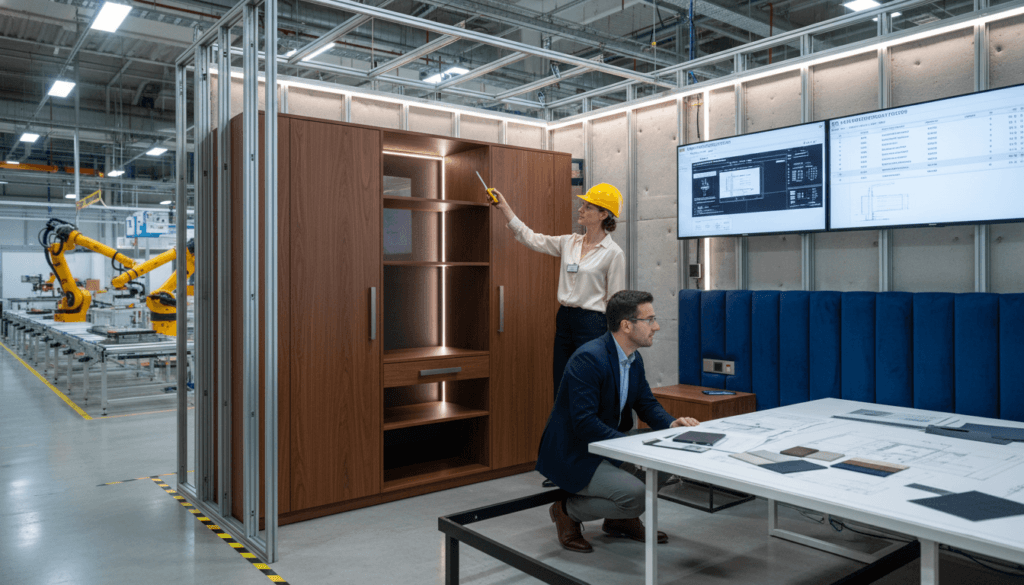
Before committing to the mass production of hundreds of rooms, executing a physical prototype is the ultimate strategy for reducing risks in hotel procurement. Creating hotel model room furniture is not an optional luxury; it is a mandatory risk-management protocol. A 1:1 scale mock-up room allows stakeholders to physically test the ergonomics, verify the structural integrity, and ensure the finishes perfectly align with brand standards. It provides a crucial opportunity to discover spatial conflicts—such as a nightstand blocking a customized power outlet or a wardrobe door clashing with a bed frame. Catching and correcting a dimensional error during the hotel FF&E prototyping phase costs virtually nothing. Conversely, discovering that same flaw after five hundred units have been manufactured and shipped across the globe is a financial disaster that can single-handedly derail a hotel’s grand opening schedule.
Global Sourcing & Logistics: Avoiding Hidden Procurement Costs
Executing a successful international project requires mastering global hotel furniture sourcing and the complex logistics that accompany it. Buyers must be hyper-aware of the Total Landed Cost, which encompasses much more than the factory’s Ex-Works (EXW) price. Hidden costs often lurk in fluctuating ocean freight rates, complex customs tariffs, and unexpected warehousing fees. To ensure efficient hotel furniture procurement, operators must partner with suppliers experienced in global logistics who can optimize container loading and navigate international trade regulations seamlessly. A comprehensive strategy should align furniture delivery with your broader Hotel Amenities Procurement Guide, ensuring that beds, case goods, and operational supplies arrive in a synchronized sequence. Mismanaged hotel furniture logistics is the leading cause of delayed grand openings, which translates to massive losses in projected room revenue and severe damage to investor confidence.
Sustainability in Hotel Furniture: Making Eco-Friendly Choices
Environmental responsibility is no longer a niche marketing angle; it is a fundamental mandate driven by major hospitality brands and modern travelers. Integrating sustainable hotel furniture into your procurement strategy is essential for achieving corporate ESG (Environmental, Social, and Governance) goals. Opting for eco-friendly hotel furniture involves sourcing FSC-certified woods, utilizing low-VOC (Volatile Organic Compound) finishes, and incorporating recycled metals and fabrics. These green furniture solutions for hotels significantly improve indoor air quality, ensuring a healthier environment for guests. Furthermore, prioritizing sustainability can qualify properties for coveted LEED certifications, which directly attract a growing demographic of eco-conscious corporate and leisure travelers. By partnering with forward-thinking manufacturers, hoteliers can seamlessly blend luxurious design with responsible manufacturing, proving that commercial durability and environmental stewardship can coexist profitably.
How to Choose the Right Hotel Furniture Supplier: Key Criteria
The success of your entire project hinges heavily on choosing a hotel furniture supplier capable of delivering on their promises. When evaluating potential partners, strict hotel furniture vendor selection criteria must be applied. A reliable hotel furniture supplier should provide transparent factory audits, demonstrating robust production capacity and adherence to ISO quality management systems. Look for manufacturers with an extensive portfolio of successful global project references, proving their ability to execute at scale. Furthermore, a top-tier supplier does not simply sell furniture; they offer comprehensive, one-stop services, including dedicated English-speaking project managers, in-house CAD engineering, and a rock-solid post-installation warranty. Thoroughly vetting hotel FF&E vendors ensures you are partnering with a manufacturing powerhouse that will actively protect your investment from the drafting table to the final installation.
Conclusion: Elevate Your Project with PMOU’s One-Stop Solutions
Mastering hotel furniture procurement means securing long-term ROI without compromising quality. As your factory-direct partner, PMOU eliminates middleman markups while delivering commercial-grade durability and flexible OEM/ODM customization. Our one-stop service handles everything from value-engineering to global logistics, ensuring a flawless, on-time grand opening. Don’t risk your investment on fragmented supply chains. Partner with PMOU today to bring your hospitality vision to life—on time and strictly on budget.
Frequently Asked Questions (FAQs)
What is the average cost to furnish a standard hotel room?
Costs vary widely depending on the star rating and design complexity. A standard mid-scale room typically ranges from $3,000 to $5,000, while a luxury suite can exceed $15,000. Working factory-direct can effectively reduce your overall FF&E budget by 20% to 30%.
How do I calculate the real ROI on my hotel furniture investments?
Real ROI is calculated by looking at the Total Cost of Ownership (TCO). This means taking the initial purchase price and subtracting the savings gained from zero replacement costs, minimal maintenance labor over 5-8 years, and the increased room rates you can charge due to a premium guest experience.
Why should I prioritize commercial-grade materials over standard residential furniture?
Hotels experience intense, high-traffic use. Commercial-grade furniture features fire-retardant high-density foam, heavy-duty joinery, and scratch-resistant commercial laminates (HPL). Residential furniture will quickly deteriorate under these conditions, leading to poor guest reviews and expensive early replacements.
What is the typical lead time for custom global hotel furniture procurement?
A standard timeline for custom FF&E is 12 to 16 weeks. This includes 2-4 weeks for shop drawings and mock-up production, 6-8 weeks for mass manufacturing, and 3-5 weeks for international shipping and customs clearance, depending on the destination port.
How does a “Mock-up Room” save money during procurement?
A mock-up room acts as a physical prototype. It allows designers and owners to test ergonomics, verify finish qualities, and ensure pieces fit perfectly within the room’s dimensions before mass production. Catching a dimension error here costs very little; catching it after mass production is a financial disaster.
Why is PMOU the ideal partner for global hotel projects?
PMOU offers a true one-stop customized service model. By combining factory-direct pricing with flexible OEM/ODM capabilities, we eliminate the markups of traditional purchasing agents. Our deep experience in global project docking ensures that your furniture is manufactured to exact commercial standards and delivered on time.